This is a melody to sing. Study it, memorize it and sing the notes. While doing that, keep the beat with hand movements according to the time signature. There are also some questions about the music notation which are related to the theory studied so far.
Part 1: Hungarian Dance No. 5 in A minor: score + sound + video

Hungarian Dance No. 5 in G minor was composed by Johannes Brahms (Germany, 1833–1897). It is a complex piece due to its difficult string melodies, dynamic contrasts, fast tempo, and chord complexity. The composition is in G minor, which is considered a popular minor key. It is based on a folk song by Béla Kéler, a Hungarian composer.
Eduard Reményi, a Hungarian violinist, introduced Brahms to the typical gypsy melodies called Czárdás and this led to the composition of Hungarian Dances, a group of 21 pieces, originally for piano, but later seized for full orchestra. This dance is a clear example of the Romantic period style due to its dramatic feel and emotional contrasts represented by the A-B-A structure, where the B part contrasts with the opening and closing section in a combination of lively passages and quieter parts, which reflects the movements of dancers.

Let's check if you were singing properly by using the sound file.
Finally, here's the video score. You can use it to check your progress or to help you perform properly depending on your needs. Try to gradually increase speed till you can perform as in the video below.
Lorena Varela. Hungarian Dance No. 5 in A minor Arrangement
(CC BY-SA)
Part 2: Hungarian Dance No. 5 in A minor: silent bars

Now let's do the same but this time there are some silent bars. Sing the notes even in these silent bars, trying to keep the beat and paying attention to notes and all other score markings.
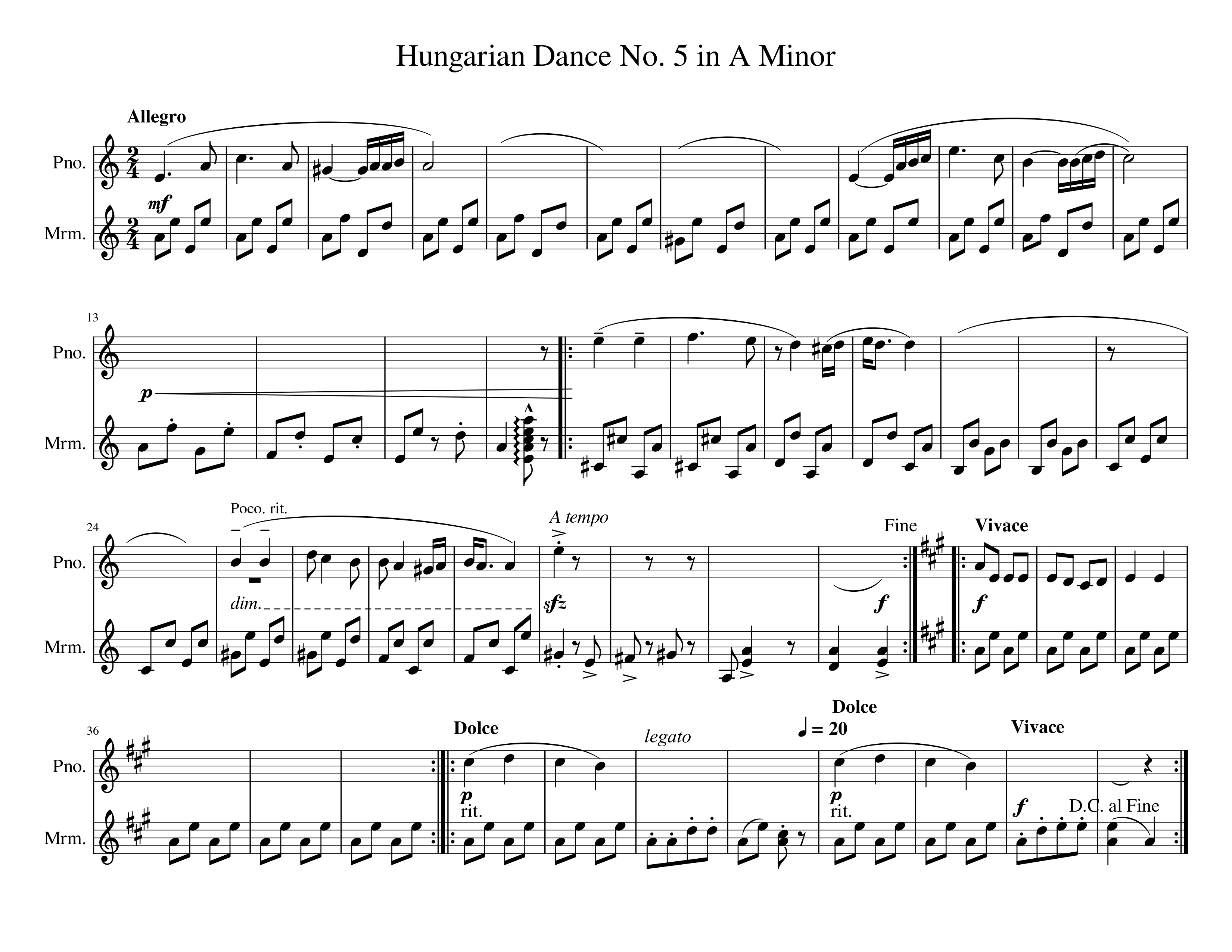
Here you have got the sound file with the silent bars. You may use it to help you know if you are singing it correctly.
Part 3: Hungarian Dance No. 5 in A minor: accompaniment
 The next step is singing the whole song by only listening to the accompaniment. This is a new stage. By now you should be able to sing all the bars if you have rehearsed enough part 1 (listening to the complete melody) and part 2 (listening to the melody but with some silent bars).
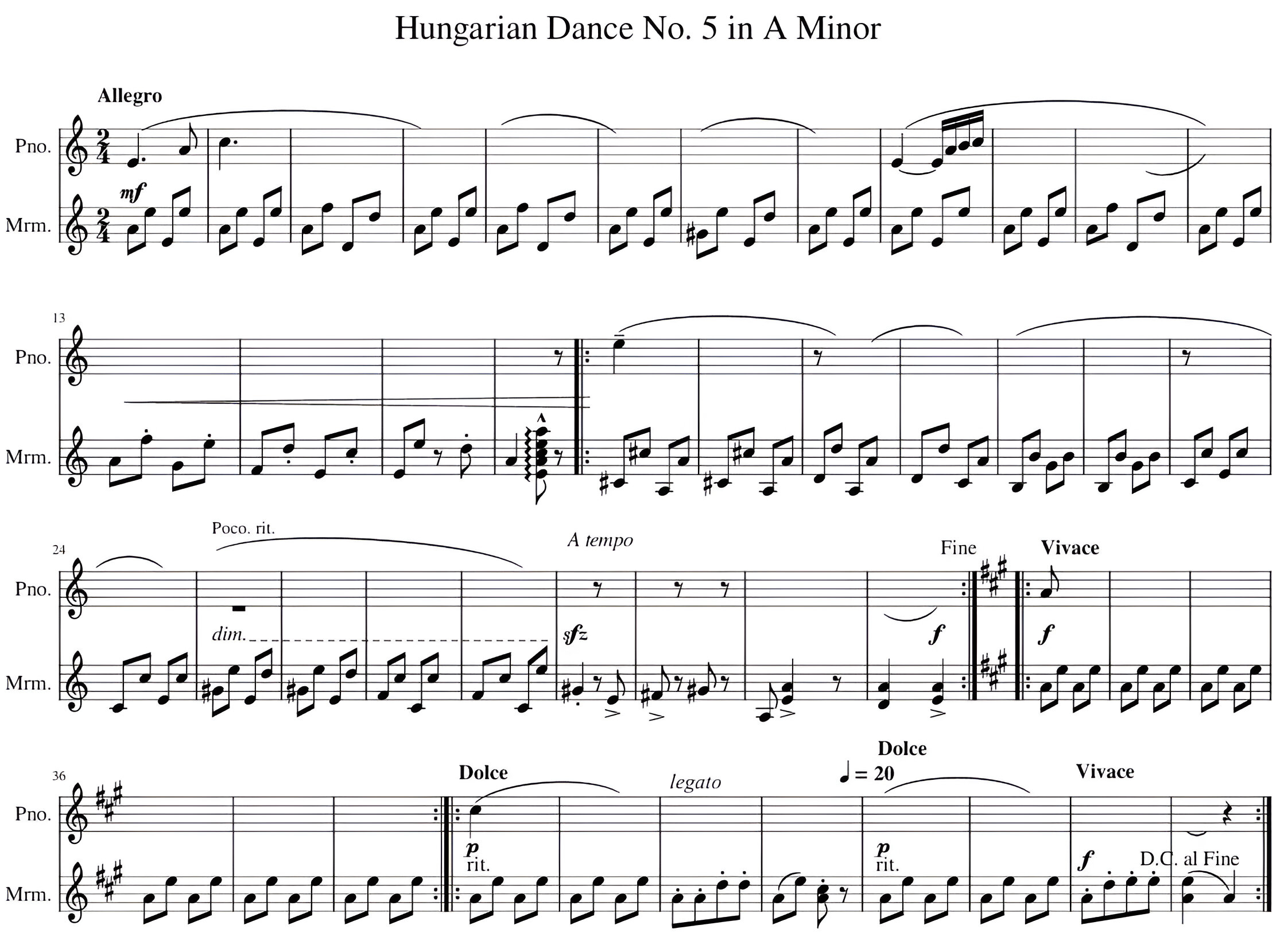
Finally, here you have got the sound file corresponding to the accompaniment.
Now it is time to check if you have looked through the score carefully. Answer these questions.
1. This piece has no alterations in the key signature at the beginning, so what key is it used?