Reading, memorizing and singing 2
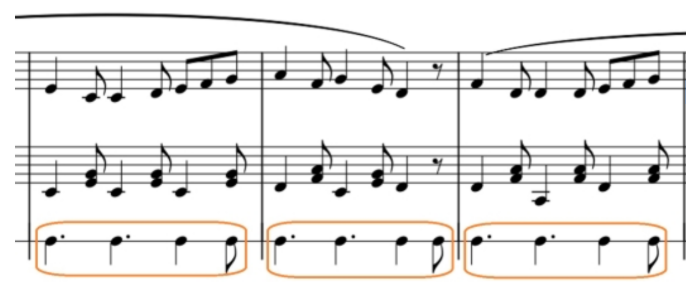
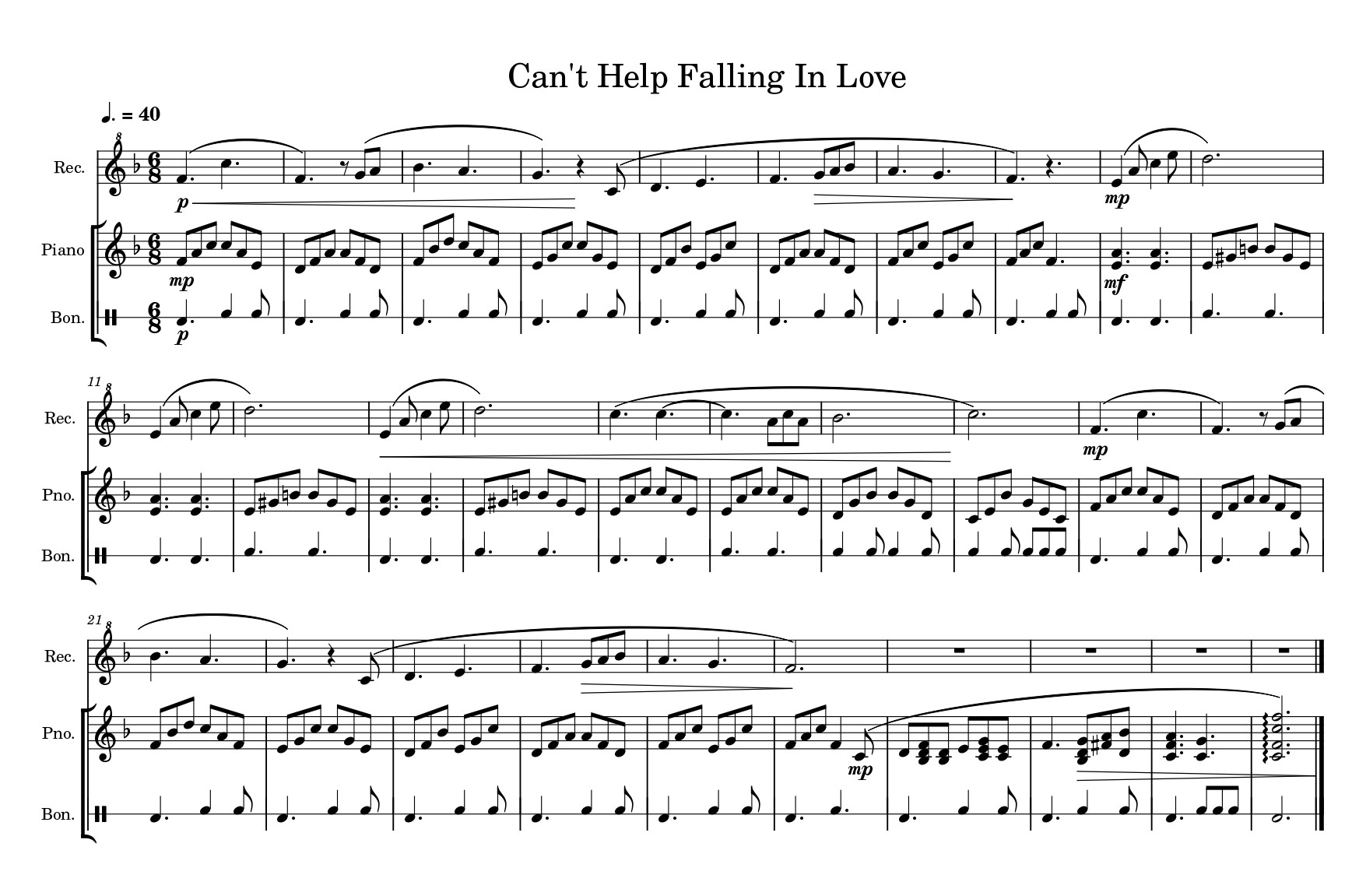
-The instrumental percussion accompaniment of this piece is organized into rhythmic motifs. What is the name of the rhythmic motif that is repeated in the same way for several measures? Ostinato.
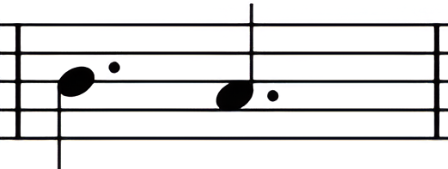
-Three dotted crotchets complete a 9/8 measure and have the same value as...nine quavers.
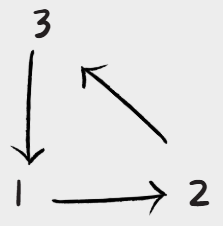
-To read this piece, the movement of our hand will draw...a triangle.
-This piece includes indications such as mf, p, mp. These terms belong to...dynamics.
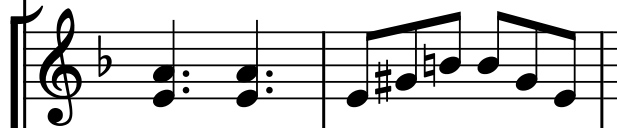
-What's the interval between the first and the second note in the first bar? 3rd (There are three steps between A and C).
This is the second melody to work with in this section. Remember what you have studied about six eight time signatures, check the clef and see if you know all the notations that appear in the score. Let's get to work!
Part 1: Can't Help Falling in Love: score + sound + video

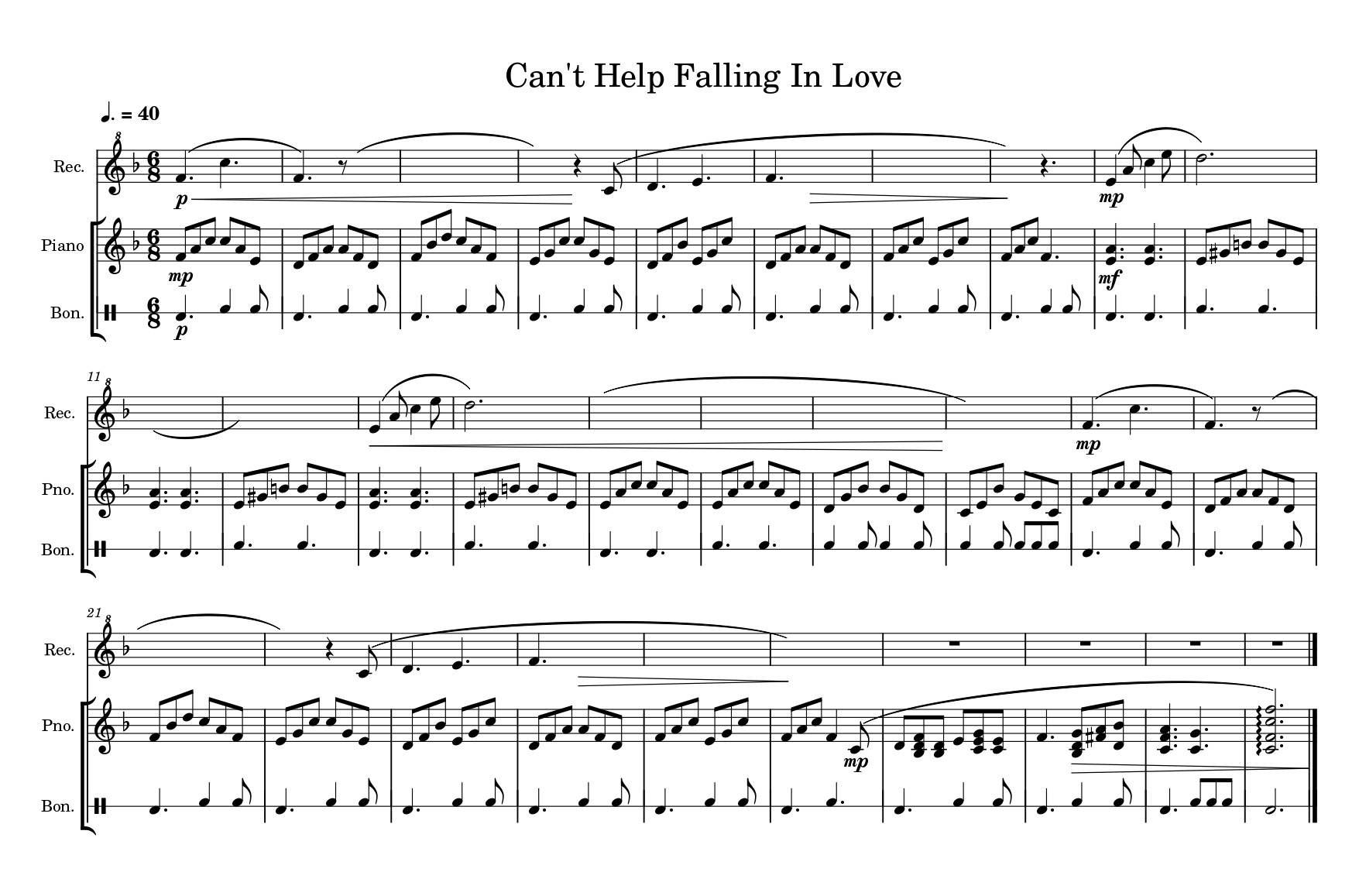
Look through the score, read it several times, study it and make sure you can identify all the notes. Pay attention to all the symbols in the score that indicate how the piece has to be played: slurs, ties, dotted notes, etc. Once you are ready, sing the notes aloud.
Plaisir d'amour, a 1784 French love song by Jean Paul Égide Martini is the origin of the song Can't Help Falling in Love from the 1961 Elvis Presley album Blue Hawaii. It was part of the soundtrack of the film with the same name. It soon became a success and it was recorded and covered by numerous singers: Doris Day, Shirley Bassey, Patti Page or Bob Dylan.



Here's the sound file to listen to the score.
There is also a video if you need extra help to sing the notes and keep the beat.
Part 2: Can't Help Falling in Love: silent bars
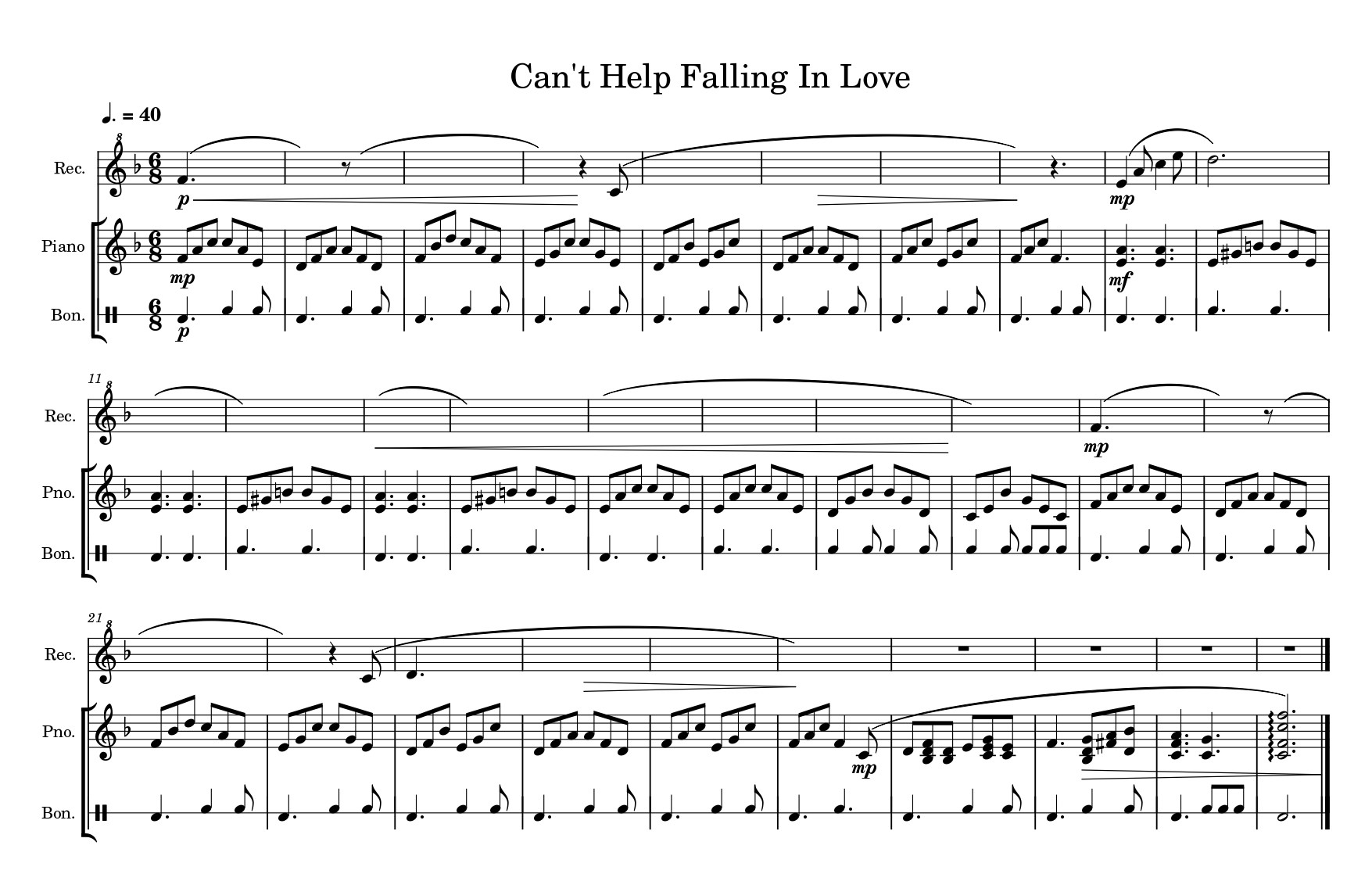
 Do the same as with the previous score but pay attention to the silent bars. As you have memorized the score, you won't have any problem in singing the melody during the silent bars.
Here's the audio file to help you follow the score.
Part 3: Can't Help Falling in Love: accompaniment
In this third part, there is only the accompaniment, so you will have to sing the notes with that sound line alone. It is important that you have rehearsed the previous exercises enough to do it fluently.
The sound file below is the one that contains the accompaniment alone. Let's see how well you can follow that accompaniment.
When you finish these three singing exercises, answer the questions below about the score. Once you have chosen the correct option, click on the word "Check". After you have completed all the questions, you'll see the correct answers explained in a new window.