This is a melody to sing. Study it, memorize it and sing the notes. While doing that, keep the beat with hand movements according to the time signature. There are also some questions about the music notation which are related to the theory studied so far.
Part 1: Over the Rainbow: score + sound + video

Over the rainbow is a ballad created by Harold Arlen in 1939 for the fantasy film The Wizard of OZ. It was sung by Judy Garland, the star of the film in the role of Dorothy. The plot tells the story of Dorothy and her dog, Toto, who are blown away to Oz by a tornado. She then seeks the Wizard to help her return home. On the way to find him, she meets a Scarecrow, a Tin Man, and a Lion. Together they face dangers and adventures till she finally realises home was nearer than she thought.
The song was a landmark in Judy Garland's career, reflecting her dreams and her trials to overcome difficulties. She often performed it in concerts. In 1940, it won the Academy Award for Best Original Song.
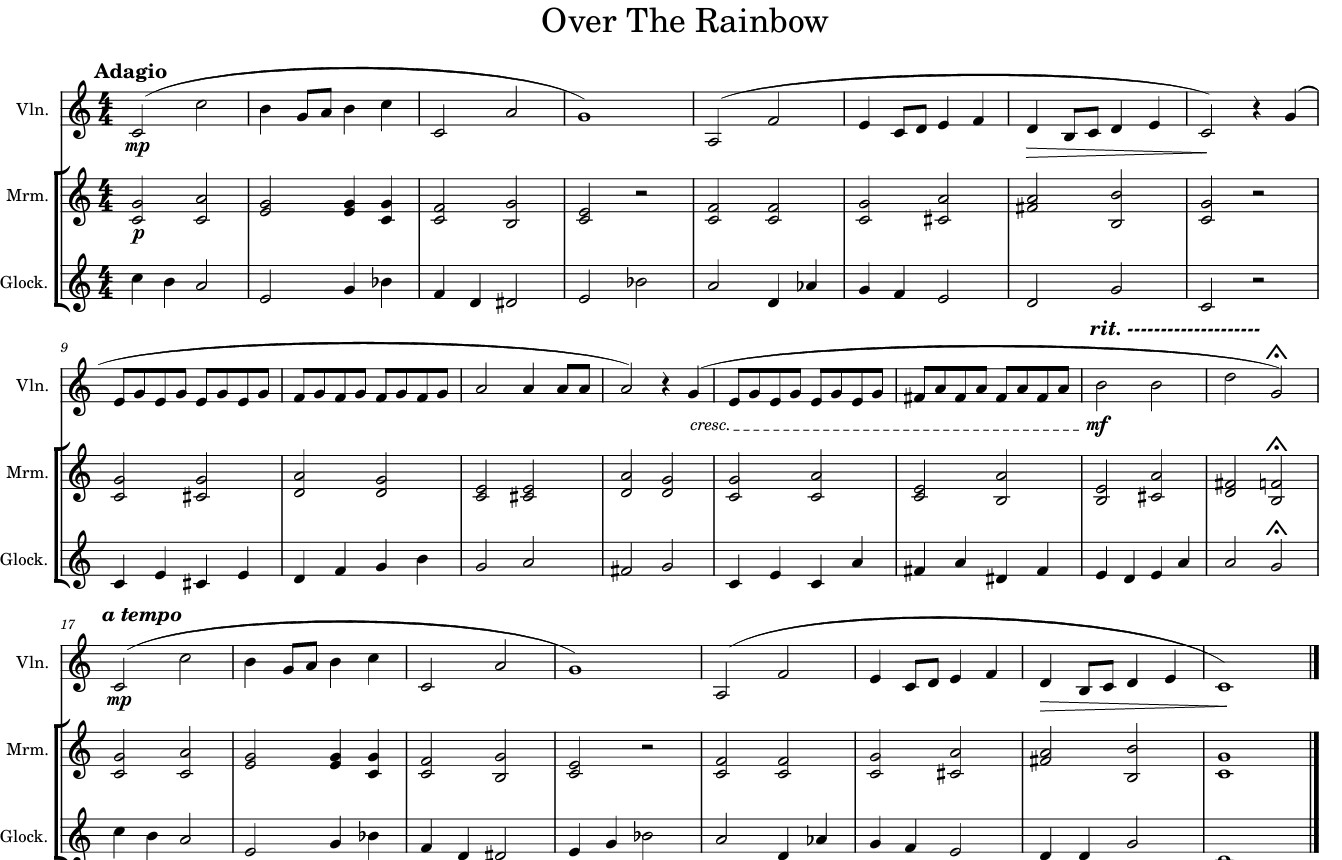
Now pay attention to the sound file. Were you singing properly?
Finally, whether you would like to check sound and see the notes or receive extra help, here's the video score. This is the real tempo of the piece. Try to gradually increase the speed to see if you can play it just as fast.
Lorena Varela. Over the Rainbow Arrangement (CC BY-SA)
Part 2: Over the Rainbow: silent bars
 Now the same but with some silent bars. Sing the notes even in the silent bars, trying to keep the beat and paying attention to notes and other score markings.
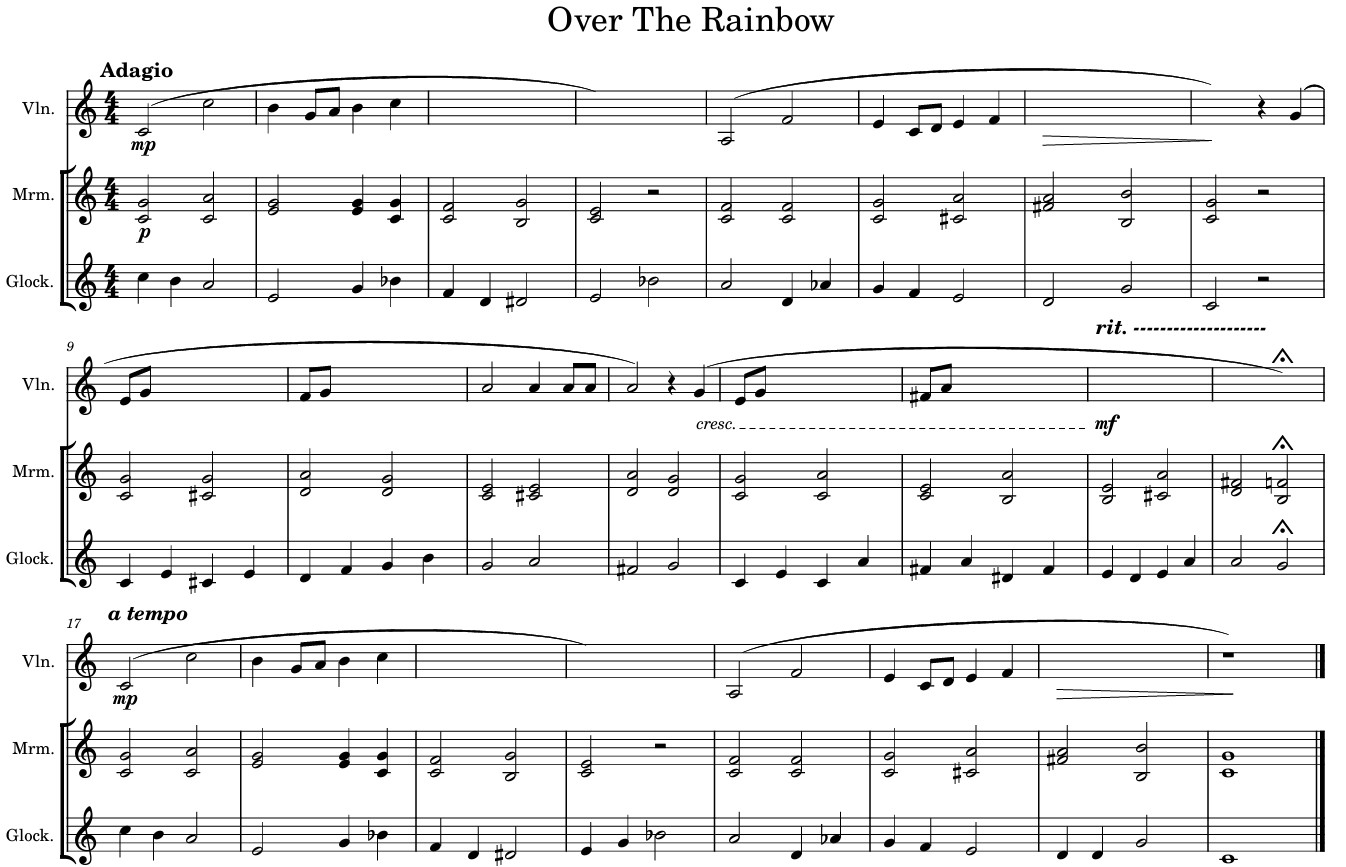
Here you have got the sound file with the silent bars. You may use it to help you know if you are singing it correctly.
Part 3: Over the Rainbow: accompaniment
 The next step is singing the whole song by only listening to the accompaniment. This is a new stage. By now you should be able to sing all the bars if you have rehearsed enough part 1 (listening to the complete melody) and part 2 (listening to the melody but with some silent bars).
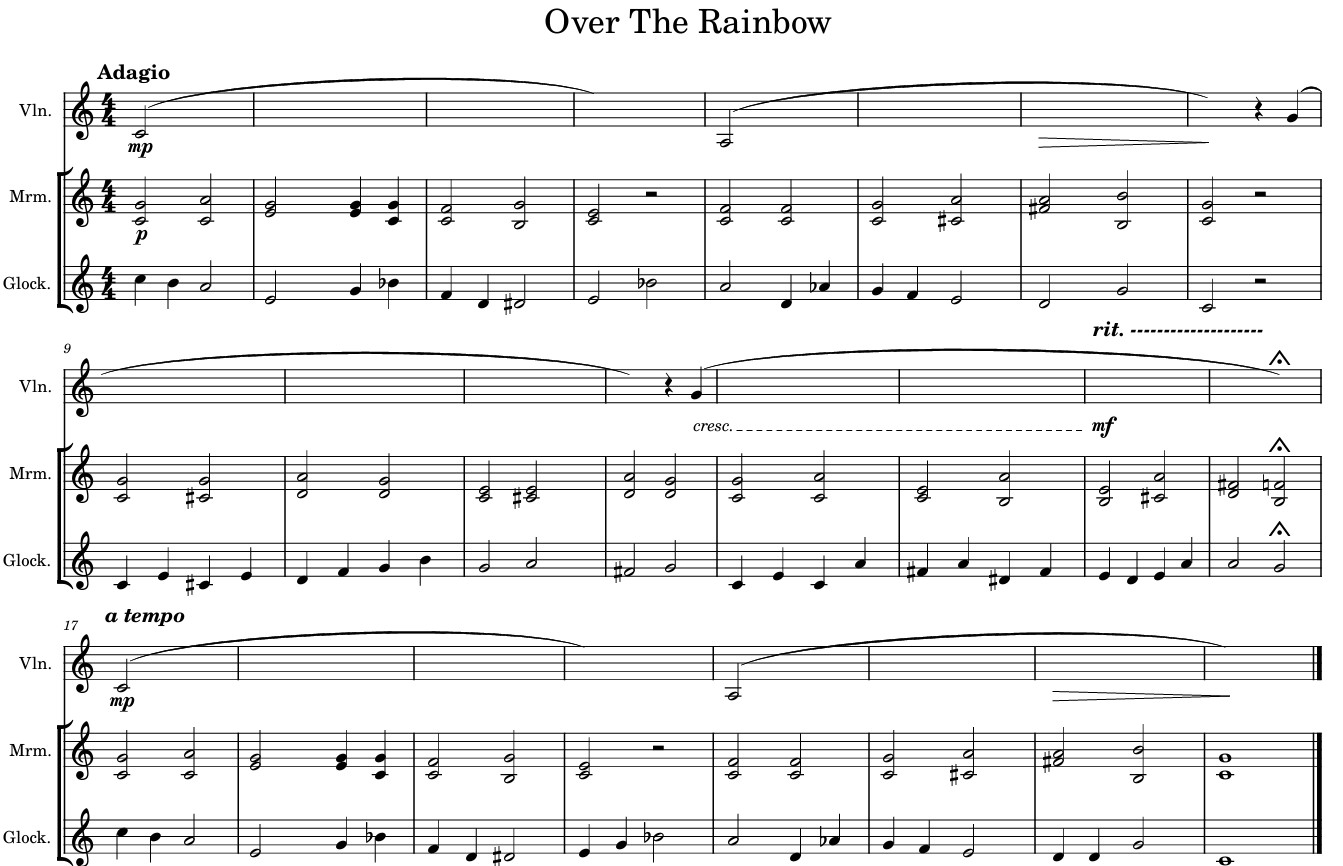
Finally, here you have got the sound file corresponding to the accompaniment.
And now, let's see how much you know about the score.
1. Which is the structure of this piece?