Reading, memorizing and singing 2
-3/8 time signatures give a lively and dance-like impression. Because they usually contain quavers and semiquavers.
-This tune is composed based on the D minor scale. Which notes are the subtonic and mediant or modal? C-F. In the D minor scale, the subtonic is the flat seventh and the mediant (F) is the third scale degree.
-In the D minor scale, the tonic triad—which is built on the first degree of the scale—is formed using the root (D), the third (F), and the fifth (A).
-This tune contains repetition signs. Yes, it contains first and second time bars and D.C. al Fine.
-Which is the music form of the piece? AA-B-C-A. First, play section A with the first-time bar. Then, repeat section A using the second-time bar. Next, play sections B and C. At the end, there is a repeat sign (D.C. al Fine), which tells us to return to the beginning (A) and finish where it says Fine.
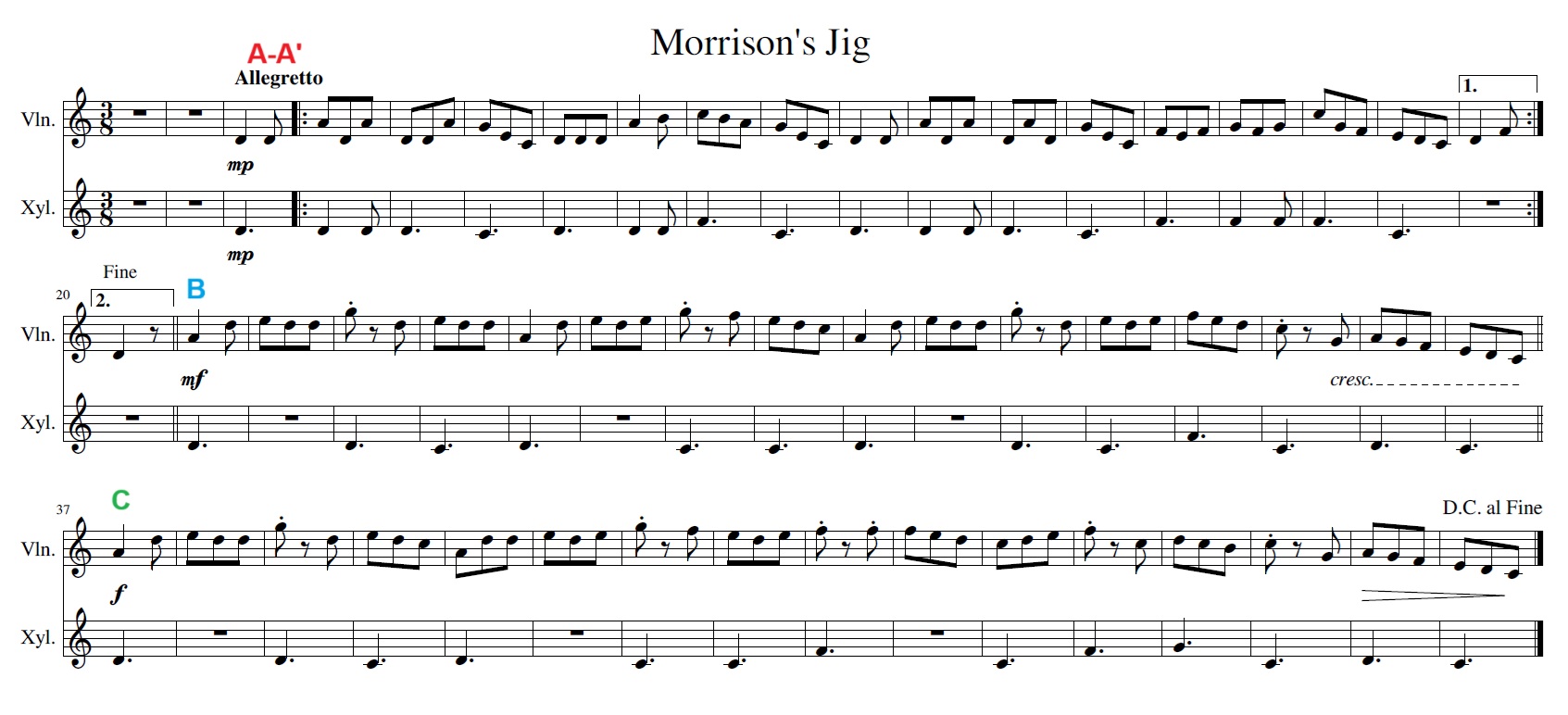
This is the second melody to work with in this section. Remember what you have studied about 3/8 time signatures, check the clef and see if you now all the notations that appear in the score. Let's start work!
Pat 1: Morrison's Jig: score+sound+video

Look through the score, read it several times, study it and make sure that you can identify all the notes. Pay attention to all the symbols in the score that indicate how the piece has to be played: repetition signs, dotted notes, dynamic markings, etc. Once you are ready, sing the notes aloud.
Morrison's Jig is nowadays a famous traditional Irish tune that may be performed in both formal and informal gatherings. Its origin is not completely clear, but it seems that the Irish accordion player, Tom Carmody, learnt it from his father Maurice and showed it later to the fiddle player James Morrison, who recorded the tune in the US around the 1920s. He named it Maurice Carmody's Favourite, but all through the years, it has also been called Cry of the Celtic, Stick Across the Hob, Port Uí Mhuirgheasa, and other names. The tune has a 3/8 time signature, whose lively and swinging feel makes it perfect for dancing. It frequently contains triplets and grace notes (a musical note added as an ornament and which is frequently drawn in a smaller way).
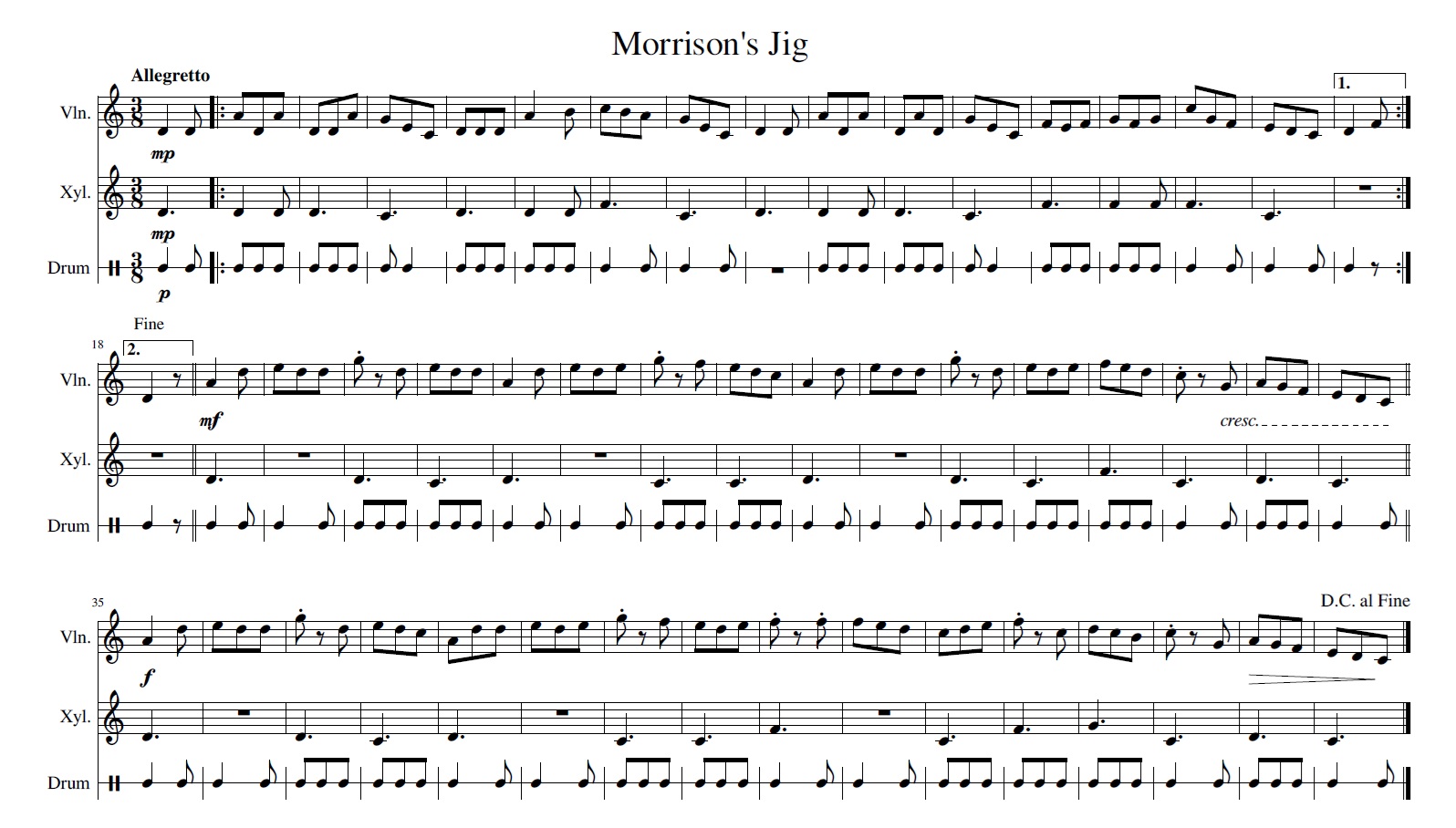
Here's the sound file to listen to the score.
There is also a video if you need extra help or if you want to check your performance.
Pat 2: Morrison's Jig: silent bars
 Do the same as with the previous score but pay attention to the silent bars. As you have memorized the score, you won't have any problem in singing the melody during the silent bars.
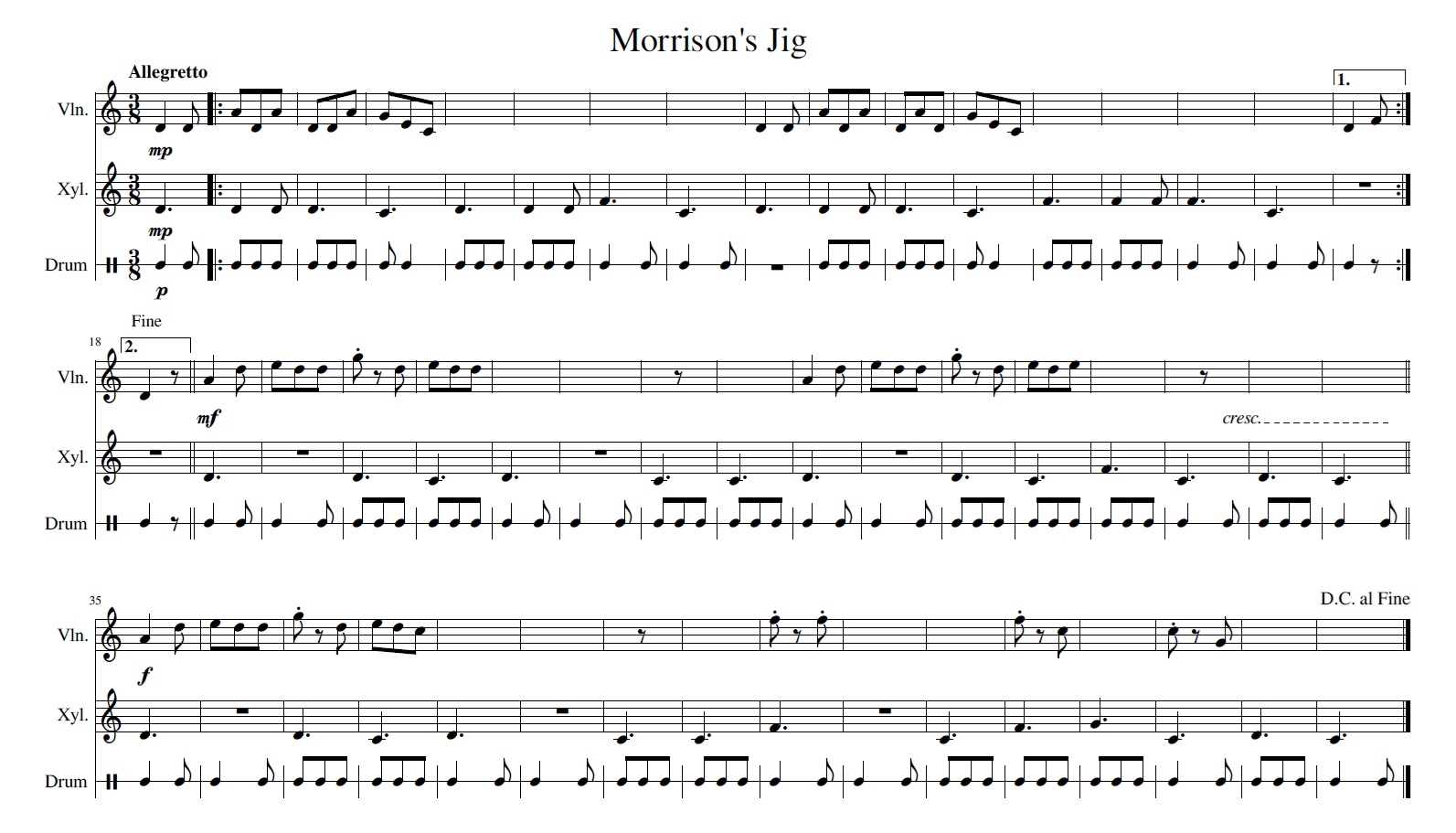
Here you have got the sound file.Try to sing it while the music is playing.
Pat 3: Morrison's Jig: accompaniment
 In this third part, you will only find the accompaniment, so, you will have to sing the notes with that sound line alone. It is important that you have rehearsed enough for the previous exercises to do it fluently.
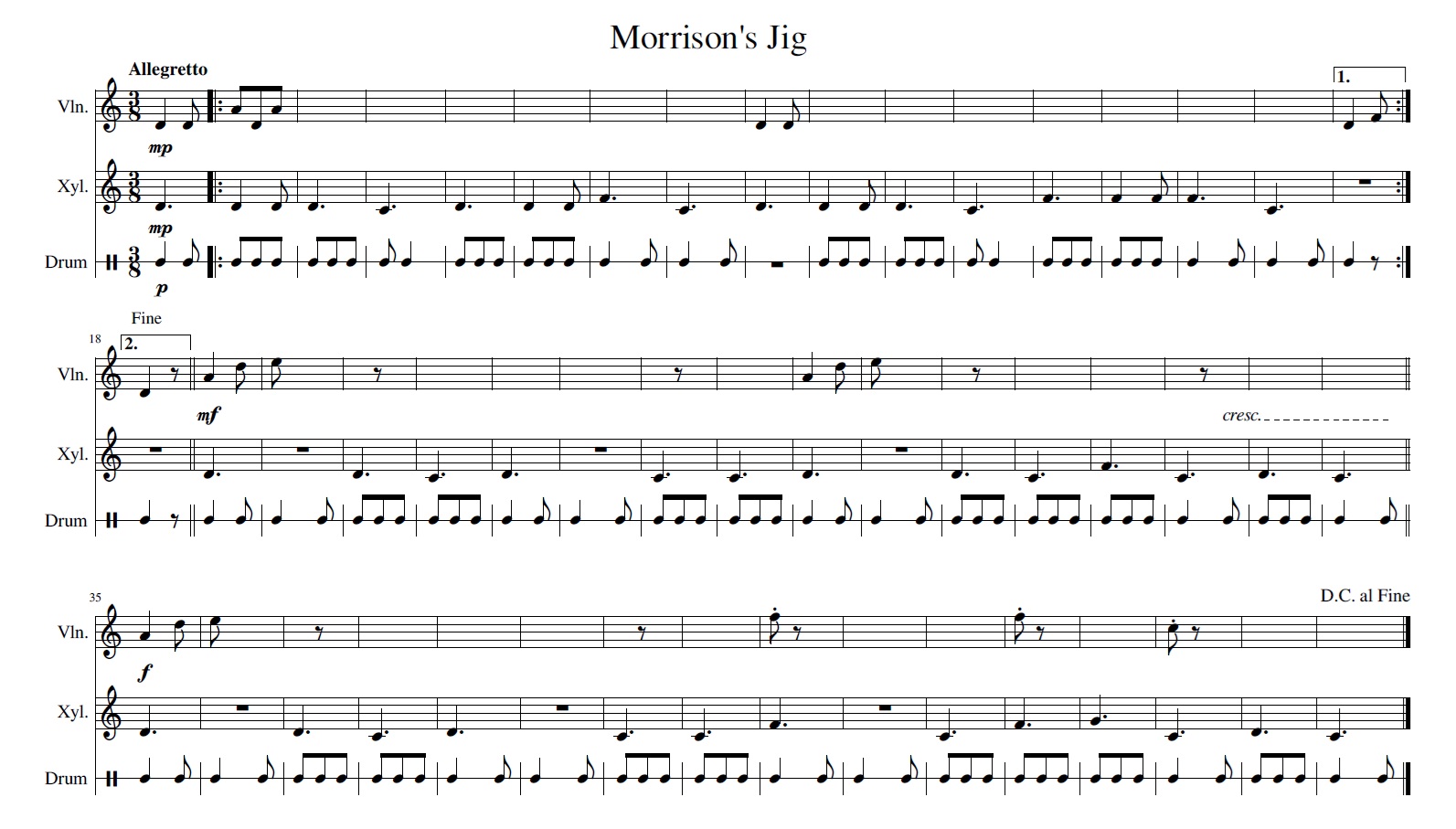
The sound file below contains the accompaniment alone. Let's see how well you can sing!.
When you finish these three singing exercises, answer the questions below about the score. Once you have chosen the correct option, click on the word "Check". When you have completed all the questions, you'll see the correct answers explained in a new window.