This is a melody to sing. Study it, memorize it and sing the notes. While doing that, keep the beat with hand movements according to the time signature. There are also some questions about the music notation which are related to the theory studied so far.
Part 1: El Vito: score + sound + video

El Vito is a typical dance and melody from Andalucia. It originally referred to the involuntary and fast movements caused by an infectious disease since the music is played using a 3/8 time signature, which is usually lively and vibrant (as it uses note values like quavers, semiquavers or even demisemiquavers, increasing so the perception of speed) and invites to an animated dance. It employs ascending and descending scales and the lyrics are usually funny and wittty. Guitar and castanets are the most frequent instruments that accompany these melodies.
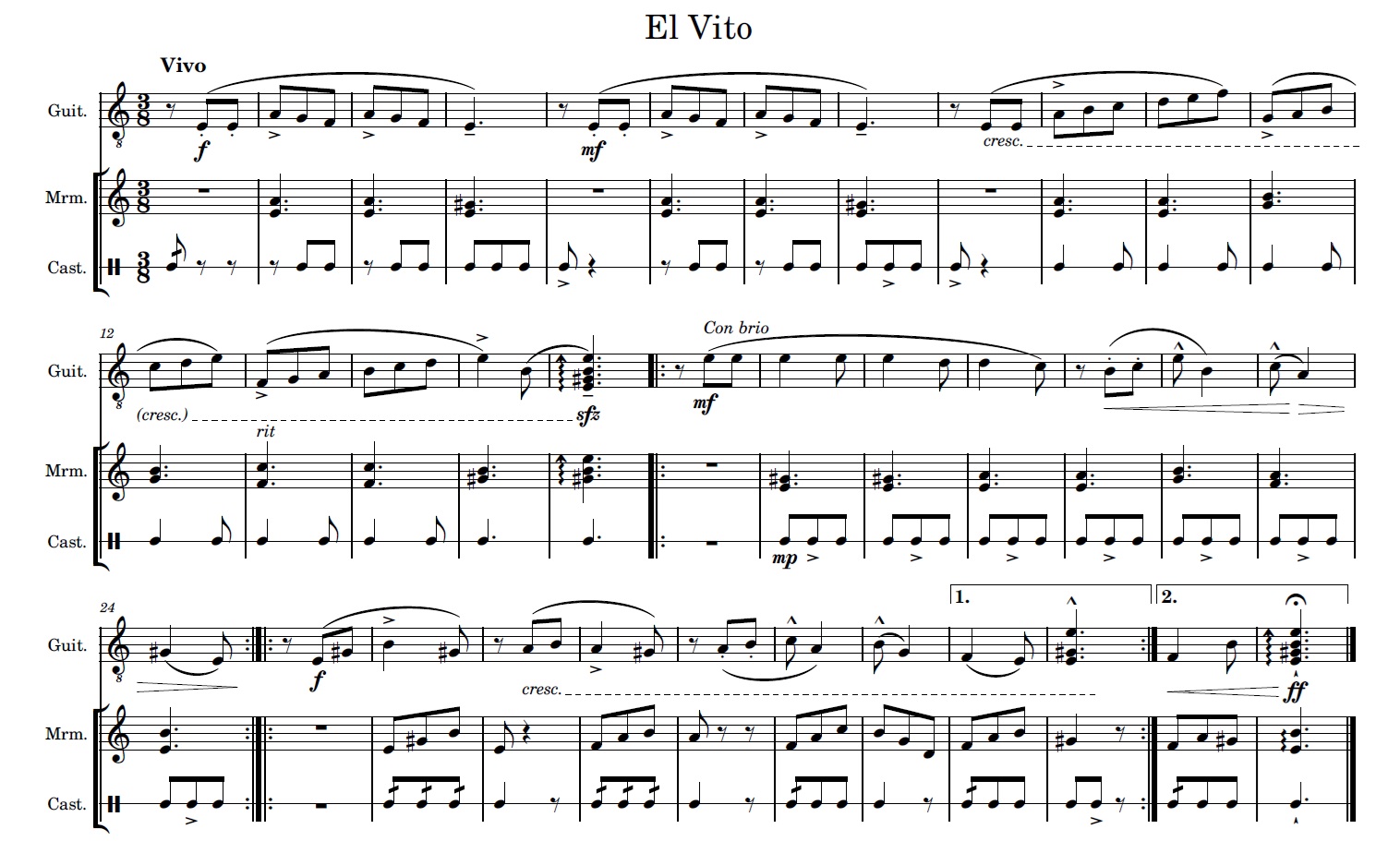
Now pay attention to the sound file. Were you singing properly?
Finally, whether you would like to check sound and see the notes or receive extra help, here's the video score. This is the real tempo of the piece. Try to gradually increase the speed to see if you can play it just as fast.
Lorena Varela. El Vito Arrangement (CC BY-SA)
Part 2: El Vito: silent bars
 Now the same but with some silent bars. Sing the notes even in the silent bars, trying to keep the beat and paying attention to notes and other score markings.
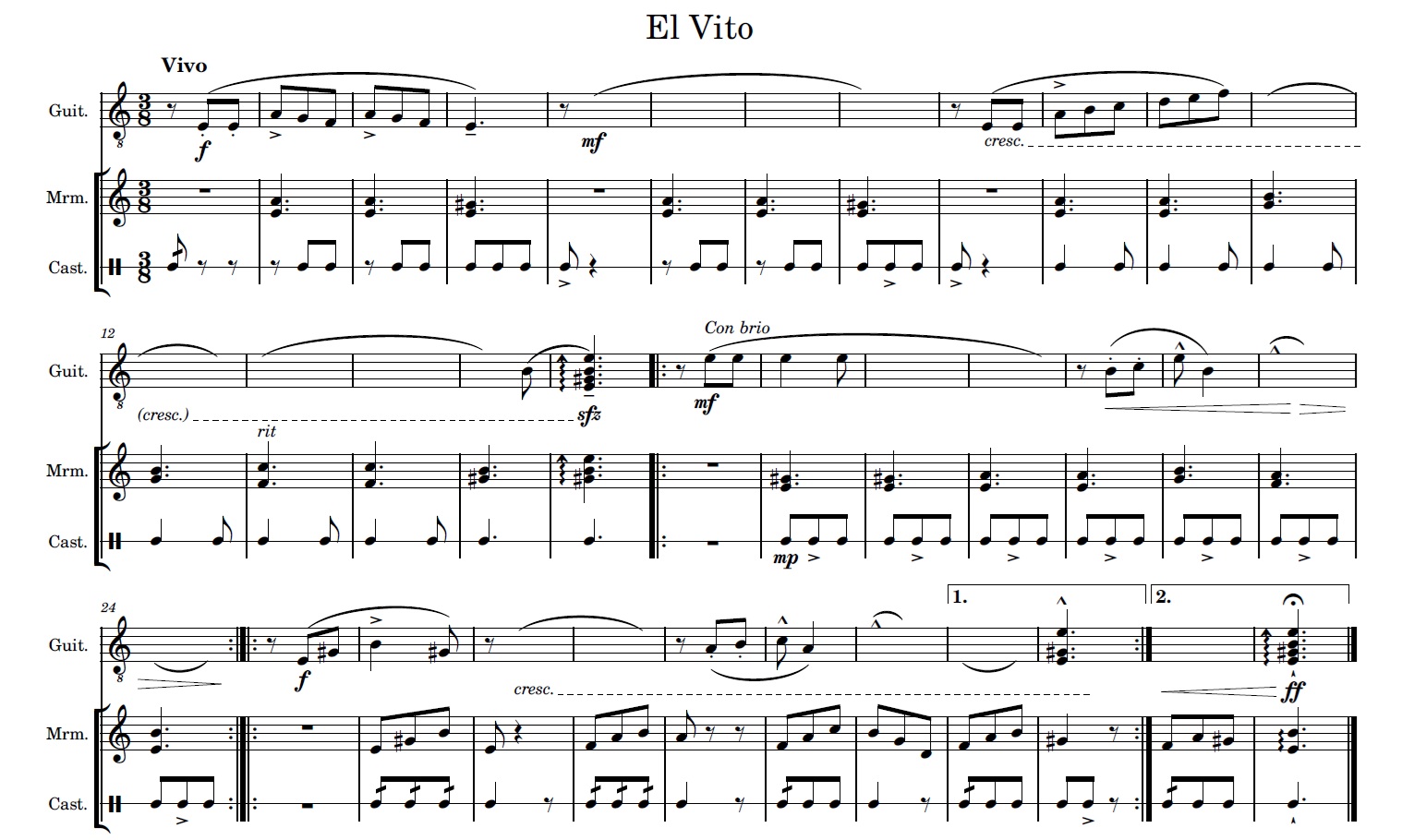
Here you have got the sound file with the silent bars. You may use it to help you know if you are singing it correctly.
Part 3: El Vito: accompaniment
 The next step is singing the whole song by only listening to the accompaniment. This is a new stage. For sure, you are now able to sing all the bars if you have rehearsed enough part 1 (listening to the complete melody) and part 2 (listening to the melody but with some silent bars).

Finally, here you have got the sound file corresponding to the accompaniment.
And now, let's see how much you know about the score.
1. What is true about the 3/8 time signature in this piece?