Protist Kingdom
Protist KIngdom
| Protists are microorganisms made up of eukaryotic cells and haven't got tissues. Protists include organisms that don't belong to any of the other kingdoms, however, the two most important groups are protozoa and algae. | ||
| PROTOZOA | ALGAE | |
|
Protozoa are heterotrophic and unicellular organisms. They mostly reproduce by binary fission but some can have sexual reproduction. They live in moist and aquatic habitats. In general their size varies from 10 to 55 micrometres. Some have structures for propulsion or other types of movements. Regarding these structures they can be classified as sporozoan, ciliates, flagellates and rhizopods. |
Protist
Protozoa
Algae
Propulsion
|
Algae are autotrophic eukaryotic organisms. Many are single-cell but others are multicellular. They can reproduce asexually, (through spores), vegetatively (through cell division) or sexually (through the union of gametes). They can live in freshwater or saltwater. Their size ranges from microscopic to 60 metres of some giant kelp. |
|
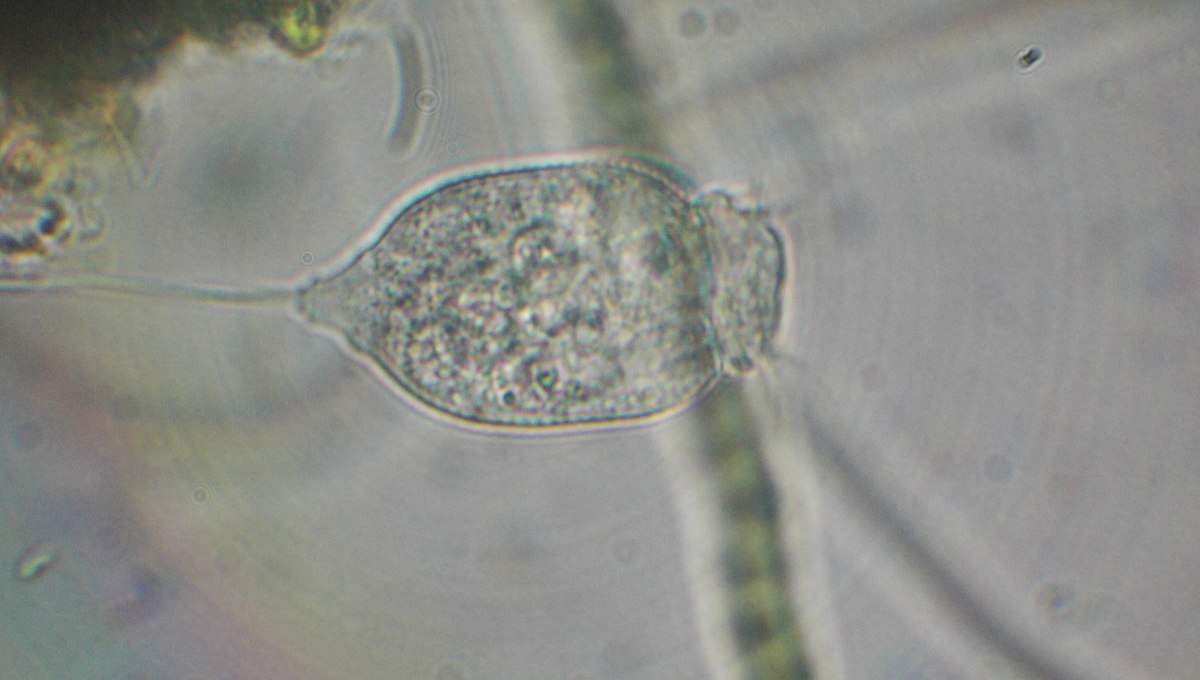
a. Sporozoan: They are non-motile and usually parasites, for example, Plasmodium vivax, which causes malaria. b. Ciliates:They have hair-like organelles called cilia around them for locomotion, for example, Paramecium caudatum or Stentor polymorphe. |
Sporozoan
Ciliates
Flagellates
|
Apart from the chlorophyll, which makes them green, they can contain other pigments that make them show different colours. If they contain xanthines, they will be brown and if they contain phycobilins, they will be red. |
|
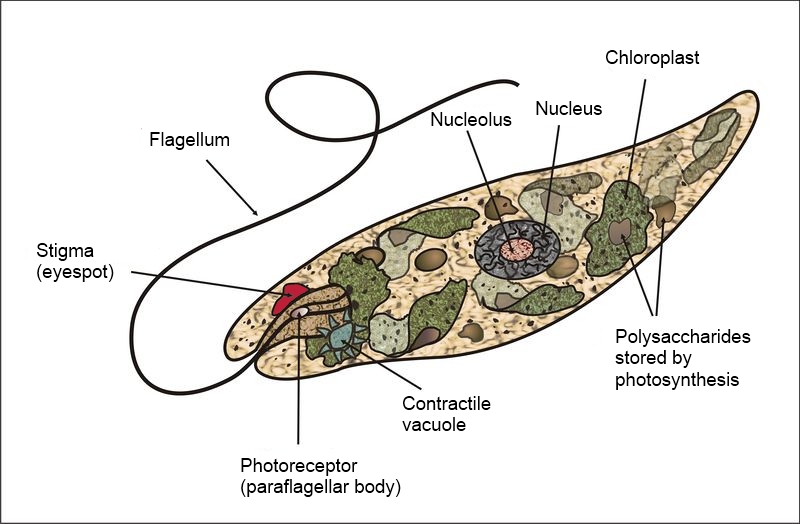
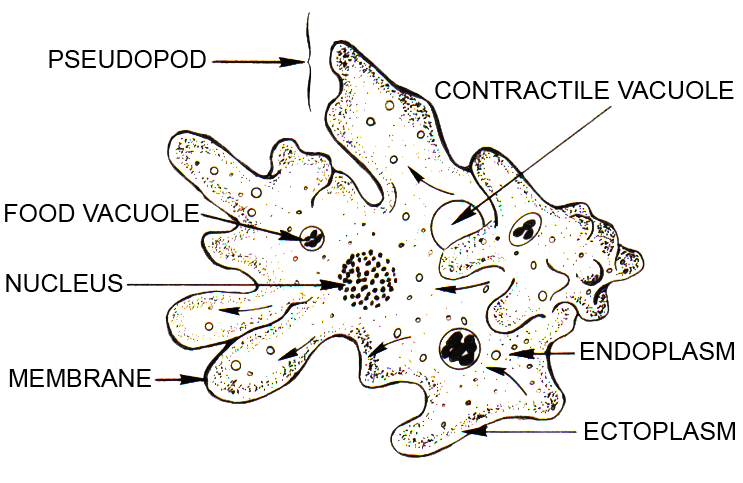
c. Flagellates: They have one or more whip-like organelles called flagella to move, for example, Tripanosoma brucei. d. Rhizopods: They move using pseudopods which can be extended or retracted, for example, amoebas. |
Xanthines
Phycobilins
|
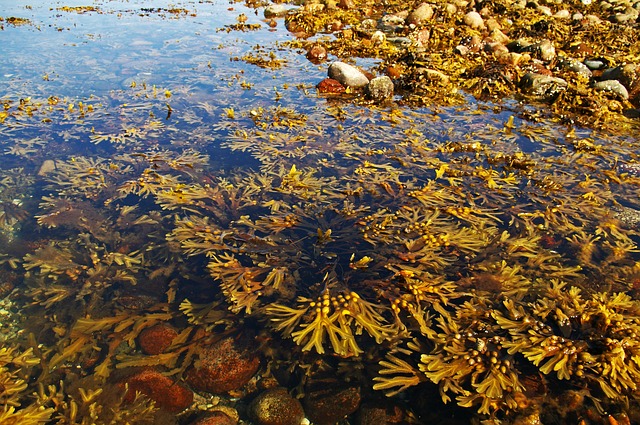
Seaweed in the Baltic Sea. Kriemer. Pixabay. (Pixabay liccence)
|
.svg.png "Amoeba")
Amoeba. Kupirijo. Wikimedia (Public Domain)
|
Rhizopods
Pseudopods
|
|
Activity 1
Activity 2
Activity 3
Extra activity
 |
 Visit the school library and find answers for these questions. Both members of the group should be able to explain the answers to the rest of the class. Visit the school library and find answers for these questions. Both members of the group should be able to explain the answers to the rest of the class. |
|
| 1. What is the red tide? | 2. What is malaria? | |
| 3. What is leishmaniasis? | 4. What is the sleeping sickness? | |
| 5. What is phytoplankton? | ||
Charles Darwin
Project
| Let's find out about women scientists in the 19th century. Divide in pairs or into groups of three and choose one woman who became a scientist in the 19th century. You can create a poster, a slideshow, a radio interview or any other method to present your work. |
Woman. Geralt. Pixabay. (Pixabay Licence) |


Licensed under the Creative Commons Attribution Non-commercial Share Alike License 4.0