Plant Kingdom
Plant Kingdom
|
Plants developed from green multicellular algae about 500 million years ago. Generally they are attached to the ground. They are multicellular organisms made of eukaryotic cells and perform autotrophic nutrition. They convert inorganic matter into organic through a process called photosynthesis. We can divide plants into non-flowering plants and flowering plants. |
||
|
NON-FLOWERING PLANTS They may be: -Bryophytes if they haven't got any conducting vessels, such as liverworts, or these conducting vessels are really simple, such as moss. -Pteridophytes if they have conducting vessels, such as fern. |
||
|
MOSS: It is a simple plant that grows on wet damp areas. It is a non-vascular plant, that means it hasn't got conducting vessels and all cells absorb water and nutrients. FERN: It is a vascular plant, that means it has got conducting vessels. It has roots, stems and complex leaves. It reproduces by spores. |
||
|
FLOWERING PLANTS They may be: -Angiosperms: They are vascular plants that have stems, roots and leaves. Their ovule is fertilized and develops in a seed which is usually in an ovary inside a flower. Examples of angiosperms are fruit trees, oak, birch, flowers and even vegetables such as broccoli or lettuce, which we eat before flowers fully develop. -Gymnosperms; They are vascular plants that have stems, roots and leaves. They are evergreen. The ovules or seeds are not enclosed in an ovary but usually on the surface of scales or leaves. Examples of gymnosperms are conifers (pine, fir, cedar, cypress) the best-known group and cycads or ginkgo. |
||

Apple tree, an example of angiosperm. Yolanda Varela (CC-BY-NC-SA)
|
.jpg "Rose")
Rose, an example of angiosperm. Yolanda Varela (CC-BY-NC-SA)
|
Angiosperm Gymnosperm Cycads |
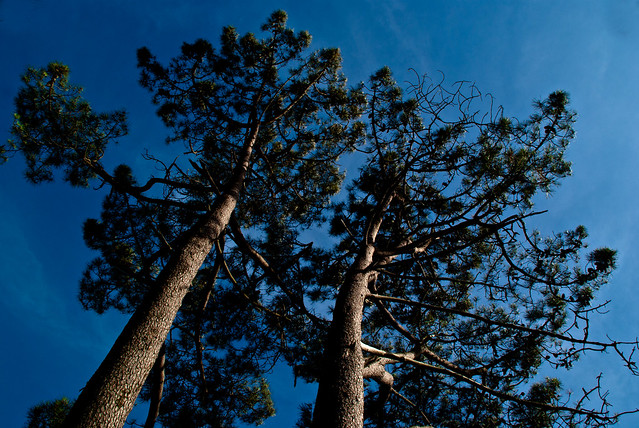
Pine trees. Yolanda Varela (CC BY-NC-SA)
|
Ginkgo Conifers Cypress |
|



Activity 1
Activity 2
Activity 3
Extra Activities
Functions of plants
|
NUTRITION: Plants are autotrophic so they can produce their own food.They absorb water and mineral salts through their roots. This goes up to the leaves, exactly to the chloroplasts of plant cells where chlorophyll absorbs solar energy to transform water from the ground and carbon dioxide from the air into glucose. This glucose expands to the rest of the plant through the phloem vessels. |

Photosynthesis. Mary Olke. Pixabay. (Pixabay Licence)
|
|
|
Glucose |
Chlorophyll |
Phloem vessels |
|
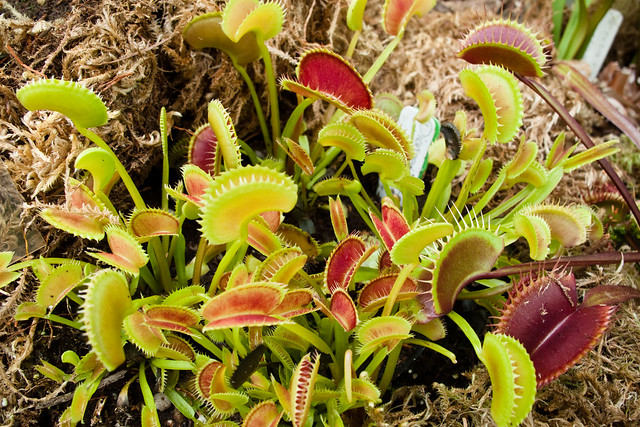
RELATION Though plants haven't got nervous systems, they can react to stimuli through movements called: a. Tropic movements: It is a permanent movement towards stimuli, for example, roots moving towards water or stems towards the light. b. Nastic movements: They are reversible movements and cease when the stimuli cease, for example, carnivorous plants close their leaves to trap insects. |
||
|
Tropic movements |
Nastic movements |
Carnivorous plants |
|
REPRODUCTION Plants may reproduce sexually or asexually. a. Asexual reproduction: A new plant is created from any part of it, for example, potatoes. Moss reproduces through spores released from a capsule on top of their axis, and fern through spores placed underside of the blades. b. Sexual reproduction: Plants need a male and a female reproductive part. Flowering plants show sexual reproduction. Have a look at this video which explains plants sexual reproduction and write the answers for the questions in your notebook. |
.png "Pollination and fertillization of angiosperm")
Pollination and fertilization of angiosperm. Lady of hats. Wikipedia. (Public Domain)
|
|
|
Sexual Reproduction in Flowering Plants. Smart Learning for All. You Tube. (Standard Licence) |
Activity 1 1. Answer these questions about the video on the left. 1. What is a stamen? 2. What do anthers produce? 3. What is a carpel? 4. What do ovaries contain? 5. What is self-pollination? 6. Why are insects important for plants? 7. How is a zygote formed? |
|
|
Carpel |
Stamen |
Anther |
|
Ovary |
Self-pollination |
Zygote |

Activity 2
Activity 3
Extra activities
| 1. Visit the school library and find answers for these questions. Write them into your notebook and prepare to tell them aloud to the rest of students. |  2. Pair group activity. Let's experiment. Click on the image below and follow the instructions. Don't forget to follow all steps to get a detailed report of the activity. 2. Pair group activity. Let's experiment. Click on the image below and follow the instructions. Don't forget to follow all steps to get a detailed report of the activity. |
|
a. What is predation? b. What is the trophic chain? c. What is commensalism? d. What are gregarious populations? |
 The effects of acid rain on plants. Yolanda Varela. (CC-BY-NC-SA) The effects of acid rain on plants. Yolanda Varela. (CC-BY-NC-SA) |
Porto Bonatical Garden
Reading Activity
| PROJECT 1 | PROJECT 2 | PROJECT 3 |
|
The leaves collection Gather leaves from the trees around you or in the local park. Use a book to identify them. Create a fact sheet for each tree. At least you must identify ten trees. |
Medicinal Plants Ask your family about the plants that have been frequently used as remedies to improve our health. Make a poster with all the information. If it is possible, get the real plants so that the other students can see them. At least you must identify twelve plants. Spices Do the same as above but this time with herbs we use to cook. At least you must identify twelve plants. |
Capillarity and nutrition Perform this experiment. Keep a diary of every step you take and draw conclusions. Record it on video to show the rest of students. Needed materials: -Plastic glasses -Water -Sugar -Celery - A spoon -A marker -Food colouring Pour some water in the glasses. Mark them with 1, 2, 3. Add sugar to glass number 2 and stir . Add food colouring to number 3. Place a stalk of celery in each glass. Keep the glasses with the celery in the fridge 48 hours. After 48 hours taste the leaves from the stalks and observe them. What conclusions can you draw? |
|
Project 4 A. What about planting vegetables in a yard? Is it possible in your school? Will you enjoy a lettuce, some tomatoes or potatoes from your yard? Is it possible to plant a tree? B. You could have a look around you and keep a record of the plants you see. Start a blog which includes information about the place your school is and a photo and information of the plants you see. |
||
Licensed under the Creative Commons Attribution Non-commercial Share Alike License 4.0