Fungi Kingdom
Fungi
| Fungi are heterotrophic organisms with eukaryotic cells. Some fungi, as yeast, are single-cell while mushrooms and moulds are multicellular. | ||
| SINGLE-CELL | MULTICELLULAR | |
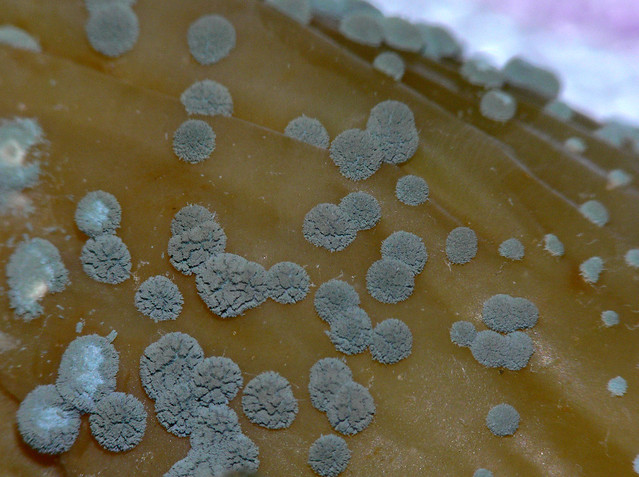
| Yeast: They are single cell fungi. When they obtain nutrients, they produce alcohol, this is called fermentation. Fermentation is a process we use to make beberages or bread. Most yeast reproduce asexually through budding, others through binary fission. | Mould: They are multicellular organisms which live in the air. They are larger than yeast and they don't have the visible structure of mushrooms. When they land on a host, they feed on them helped by a moist environment. They reproduce by releasing spores which travel through the air or water. |
Mushrooms: They are multicellular fungi. Underground there are a lot of filaments called hyphae that conform a mass called mycelium. The fruit of that mycelium is the mushroom which grows above the ground. Mushrooms reproduce through spores. They don't need light to make energy for themselves. |
|
|
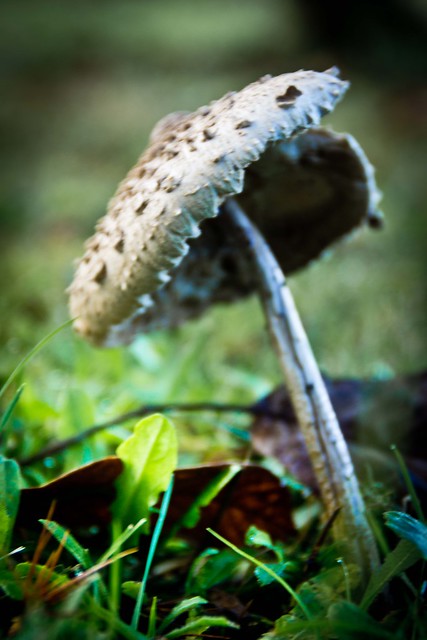
Mushroom. Yolanda Varela. (CC-BY-NC-SA)
|
|
| There are three types of fungi depending on how they get their nutrients: | ||
|
SAPROPHYTES They obtain their food from the rests of other living beings. |
PARASITES They obtain nutrients from living organisms, which causes diseases in these living organisms. |
SYMBIOTIC They obtain their food other organisms and provide some benefit in return. |


Activity 1
Activity 2
Activity 3
Extra activity
| Watch this video about the life cycle of a mushroom and answer the questions in your notebook. Then read your answers aloud for the rest of students so that they can agree or disagree with them. | |
|
Mushroom life cycle. Mrs Steward Science. YouTube. (YouTube Standad Licence) |
a. What is underneath the cap and why is it important? b. What contains the genetic material of the mushrooms? c. How does the wind help mushrooms? d. What conditions does a mushroom need to grow? |
Lourizan Forestry Research Centre
Projects
| PROJECT 1 | PROJECT 2 | PROJECT 3 |
|
How yeast works in bread. Suzanna Z. YouTube. (YouTube Standard Licence) Can you follow the steps in this video and perform an experiment like this? Don't forget to follow all the steps in the scientific method. |
Grow your own mould. HooplaKidzlab. YouTube. (YouTube Standard Licence) Let's see if we can grow mould after watching this video. Don't forget to follow all the steps in the scientific method. |
With the help of your teacher organize a walk in the forest to collect or simply take photos of mushrooms. Then gather them in an exhibition for the rest of students with a factsheet of any of the mushrooms you have found. Always follow you teacher's instructions while doing this activity. |
Licensed under the Creative Commons Attribution Non-commercial Share Alike License 4.0