A World of Music
LIVE MUSIC 3: Opera
|
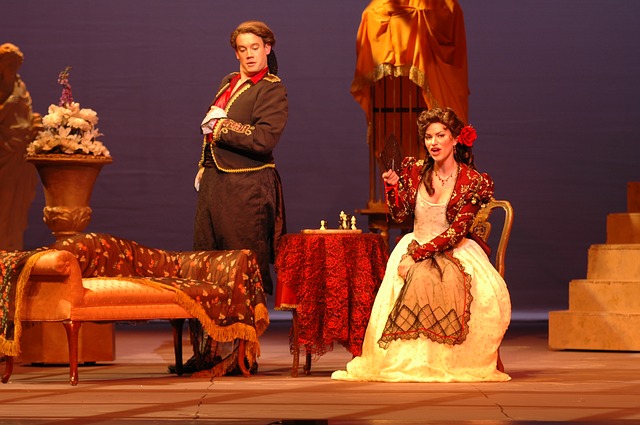
An opera is a theatrical work where operatic voices sing a libretto (the lyrics to opera music) while accompanied by a classical orchestra. They also include scenery, costumes and sometimes ballet. In Florence, 1598 Jacopo Peri produced Daphne, which is considered the first opera. There are some stages in the development of opera. Have a look at the timeline below. Baroque opera(1600-1750)The stories in this period focused on Greek mythology and represented love, death, tragedy and duty confronted to feelings. Some famous composers and some of their works were Claudio Monteverdi who wrote L'Orfeo (premiere in 1607), Francesco Cavalli who created Ormindo and Giasome and after 1700 Friederich Händel who produced Agripina, Alcina, Orlando, etc. Operas broadened from court sphere to wider audiences all through the period and, at the same time, some other works, which included low-class character and humorous situations as well as speech parts, developed. These pieces could be played independently or between opera acts. They were called zarzuela in Spain, opera buffa and intermezzo in Italy and singspiel in Germany. Classical opera(1750-1799)
Romantic opera(19th century)
Opera now(20th century)The first opera writers in this century were those under the verismo movement, which started near the end of the 19th century and extended through the beginning of the 20th. Artistic movements developed quickly in this period: -Postromanticism or wagnerism, which meant great harmony and orchestra performance. Richard Strauss was its best representative. He wrote, for example, Salome (1905), The Knight of the Rose (1911) and his last opera was Capriccio (1942). -Impressionism. Almost at the same time as the previous trend, impressionism started to develop. Operas gave emphasis to instrumental timbres, static harmony and the authors wanted to show a reaction against romanticism. Claude Debussy (1862-1918) wrote Pélleas and Mélisande and he also started a type of opera called the literary opera, which focused on literary texts that are recited. -Neoclassicism. It took place between the First and Second World War. Authors used formal, harmonic or melodic elements from the music of the eighteenth century, classical elements and even more modern elements such as dissonance. Igor Stravinsky wrote Oedipus Rex (1927), The Rake's Progress (1951) and Sergei Prokofiev's most famous opera is The Love of the Three Oranges. Carl Orff created Antigone (1949) and Oedipus der Tyrann (1959). -After the Second World War, movements such as serialism, minimalism, aleatoric music or atonality developed though the works were not really successful as audience preferred a more traditional type of opera. |
|||||||
.jpg)
LIVE MUSIC 3: Zarzuela
Zarzuelas are dramatic pieces which combine singing and speech with music, chorus and dance. In the 17th century, the Spanish writers Lope de Vega and Calderón de la Barca wrote pieces that could be considered zarzuelas but it was not till the 19th century when the Golden Age of opera arrived. There were three-act zarzuelas called zarzuela grande and two-act or shorter pieces grouped under the term género chico. In the 20th century, public TV and radio as well as recording technologies helped keep zarzuela alive. Some works were written in this century and nowadays it is also possible to attend a zarzuela in the capital or find zarzuelas in the cultural programme of big cities. Here you have the title and authors of some of the most famous zarzuelas.
- 1858 El juramento (Joaquín Gaztambide)
- 1874 El barberillo de Lavapiés (Francisco Barbieri)
- 1886 La Gran Vía (Federico Chueca y Joaquín Valverde)
- 1894 La verbena de la Paloma (Tomás Bretón)
- 1897
- La boda de Luis Alonso (Jerónimo Giménez)
- Agua, azucarillos y Aguardiente (Federico Chueca)
- La Revoltosa (Ruperto Chapí)
- 1910 La corte del Faraón (Vicente Lleó)
- 1923 Doña Francisquita (Amadeo Vives)
- 1926 El huésped del sevillano (Jacinto Guerrero)
- 1927 La del Soto del Parral (Reveriano Soutullo y Juan Vert)
- 1930 María de la O (Ernesto Lecuona)
- 1932 Luisa Fernanda (Moreno Torroba)
- 1945 La eterna canción (Pablo Sorozábal)
| Click on the image to watch a song from El huésped del sevillano. |
 |
Licensed under the Creative Commons Attribution Non-commercial Share Alike License 4.0