Skip navigation

Art Nouveau

As another reaction to the academic art of the 19th century, the Art Nouveau was an international style developed mostly between 1890 and 1914.

The movement wanted to abolish the traditional hierarchy of the arts that considered fine arts (painting, sculpture) greater than craft-based decorative arts. It was conceived as a total style focusing on architecture and decorative arts (furniture, jewellery, lighting, textiles...)

Its elegant designs were inspired from both natural (blossoms, stems) and geometric forms, and often with the influence of Japanese design.
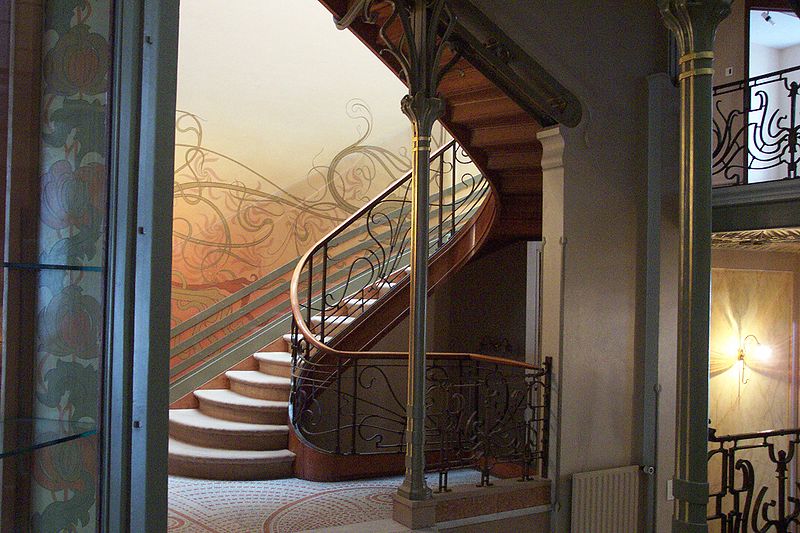
Art Nouveau stairway Art Nouveau poster Wall paper design

In architecture, Art Nouveau applied many technological innovations of the 19th century, specially in the use of materials like iron and glass.

The movement declined at the start of the First World War (1914-1918)

Women´s creative activities have been often linked to craftwork, an undervalued activity according to the academic criteria which has contributed to their anonymity.

Art Nouveau enthusiasm for decorative and graphic design increased the estimation for applied arts combined with fine arts.

Mary Seton Fraser Tyler (1849-1938) was a British artist and promoter of Arts & Crafts, who supported the revival of Celtic style, the indigeneous artistic expression of Scotland and Ireland.

She was also a Women´s Suffrage activist.

Mary Fraser Tyler(1849-1938)

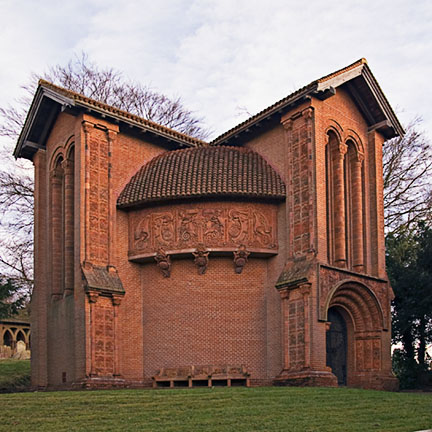
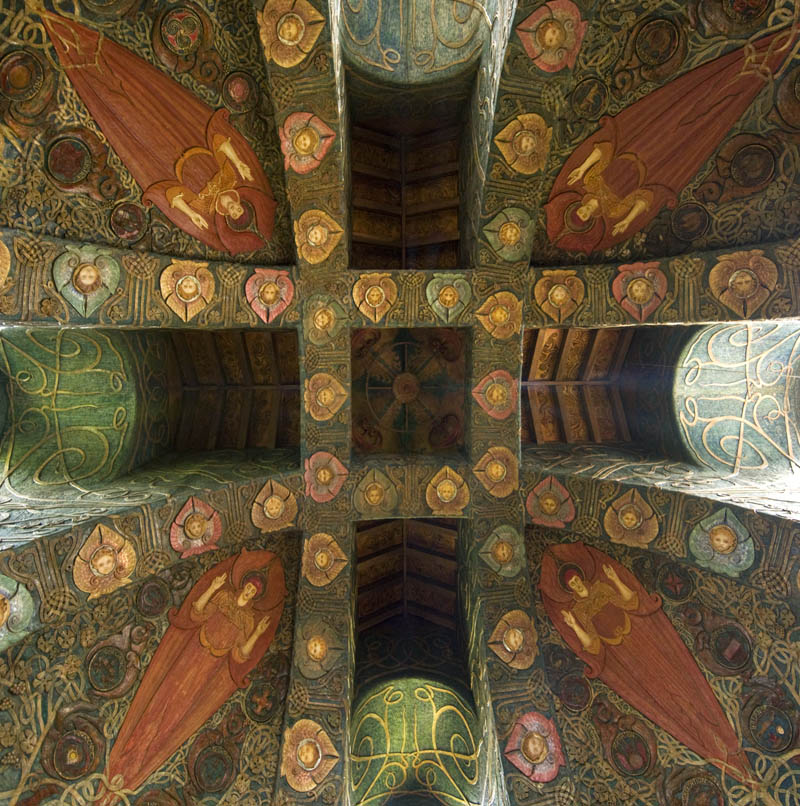
Watts Cemetery Chapel

exterior details

exterior general view ceiling


  • In Compton (Surrey), England, 1895
  • circular plan
  • fusion of Art Nouveau, Celtic revival and her personal style
  • Listed Building (Statutory of Bulding of Special Architectural Interest)

Wats Chapel exterior

Wats Chapel exterior Interior Watts Chapel

Activity

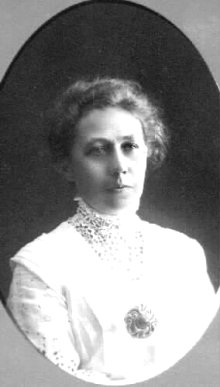
      Wivi LÖn portrait

The access to architecture studies was specially complicated for women. At the middle of the 19th century, certain schools of architecture in Europe began to admit female students, but with a special status. Although at the end of the century, women were admitted as regular students in some training institutions, professional practise was not granted, as architecture was always considered a male activity.

Wivi Lönn (Finland 1872-1966) was a pioneer in this artistic area whose first works were inspired by the Art Neuveau style.

  • Find out some information to elabotate a brief report about her work.