This is a melody to sing. Study it, memorize it and sing the notes. While doing so, keep the beat with hand movements according to the time signature. Don't forget to pay attention to 4th intervals that constantly remind us of the main motif. Also take into account the syncopated notes. There are also some questions about the music notation which are related to the theory studied so far.
Watch out! the score has an Allegro marking, so you have to rehearse enough to get to the right speed (115-143 beats per minute). You can use an online metronome to help you.
Part 1: Eine kleine Nachtmusik: score + sound + video
 Eine kleine Nachtmusik was composed by Wolfgang Amadeus Mozart (1756-1791) in 1787, probably as a composition for evening social events though it is not clear its purpose. It originally had five movements but there are only four left. The first one is Allegro (sonata-allegro form) in G major, the second a Romanza (rondo form) in C major, the third one an Allegretto (minuet and trio form) in G major, and number four is an Allegro (sonata-rondo form) in G major. It is famous for its steady pulse, staccato articulation and changing fast tempos that seem to keep the melody moving forward.
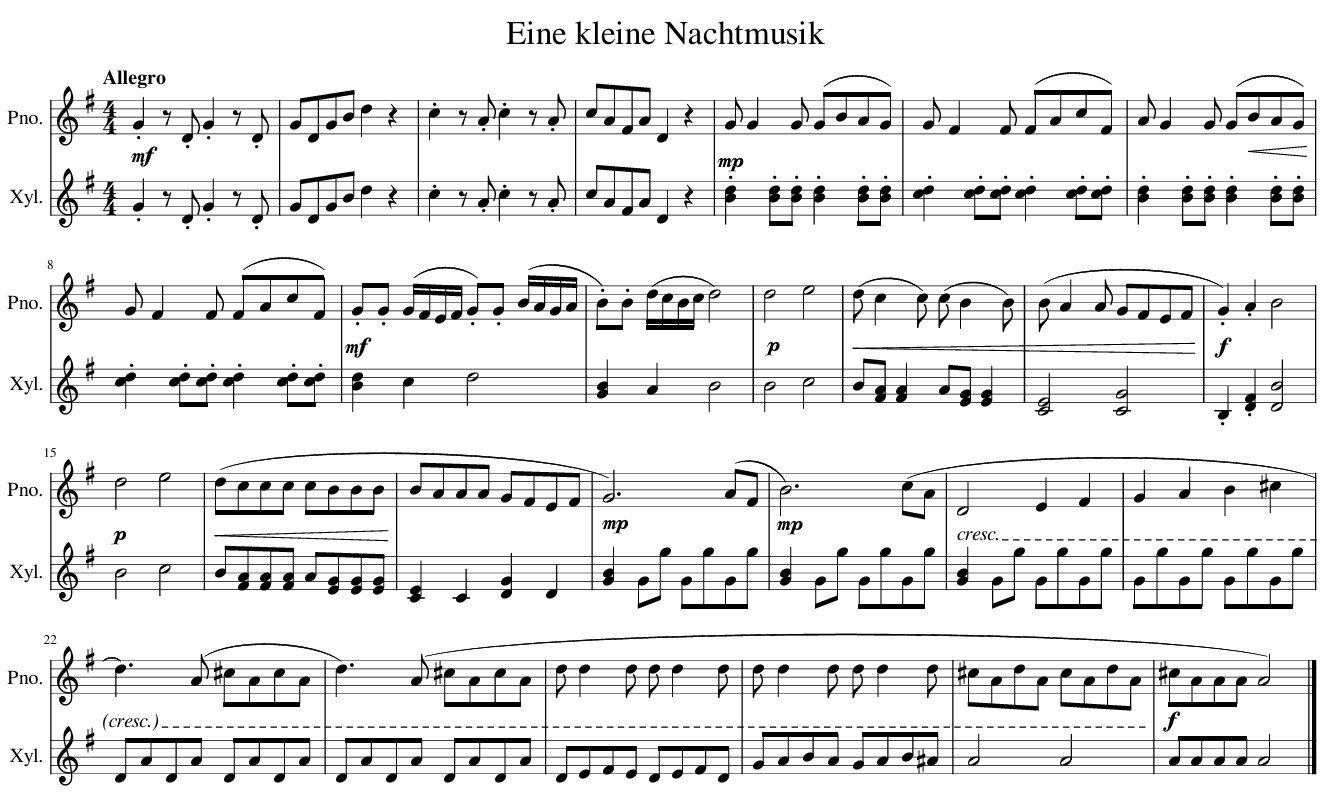
Now pay attention to the sound file. Were you singing properly?
There is also a video if you need extra help to sing the notes and keep the beat.
Lorena Varela. Eine kleine Nachtmusik Arrangement (CC BY-SA)
Part 2: Eine kleine Nachtmusik: silent bars
 Now the same but with some silent bars. Sing the notes even in the silent bars, trying to keep the beat and paying attention to notes and other score markings.
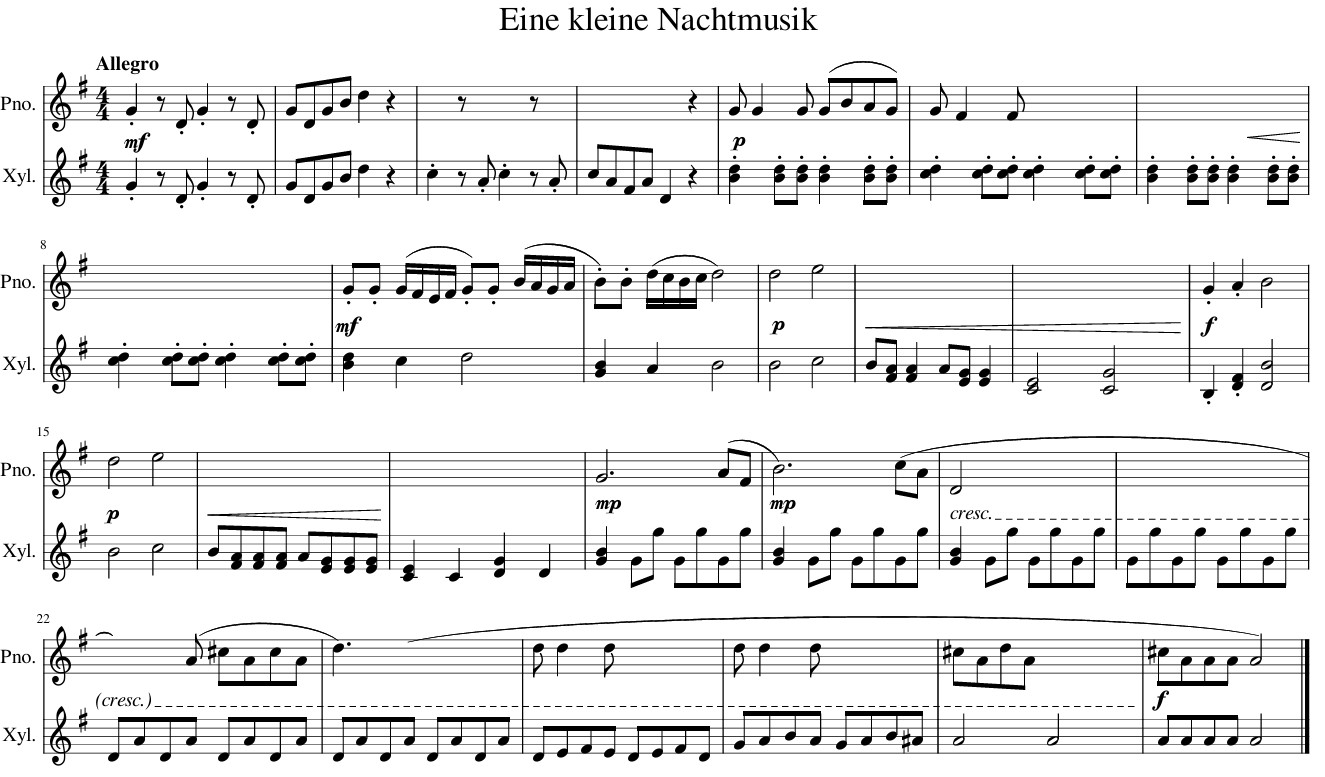
Here you have got the sound file with the silent bars. You may use it to help you know if you are singing it correctly.
Part 3: Eine kleine Nachtmusik: accompaniment
 The next step is singing the whole song by only listening to the accompaniment. This is a new stage. By now you should be able to sing all the bars if you have rehearsed enough part 1 (listening to the complete melody) and part 2 (listening to the melody but with some silent bars).
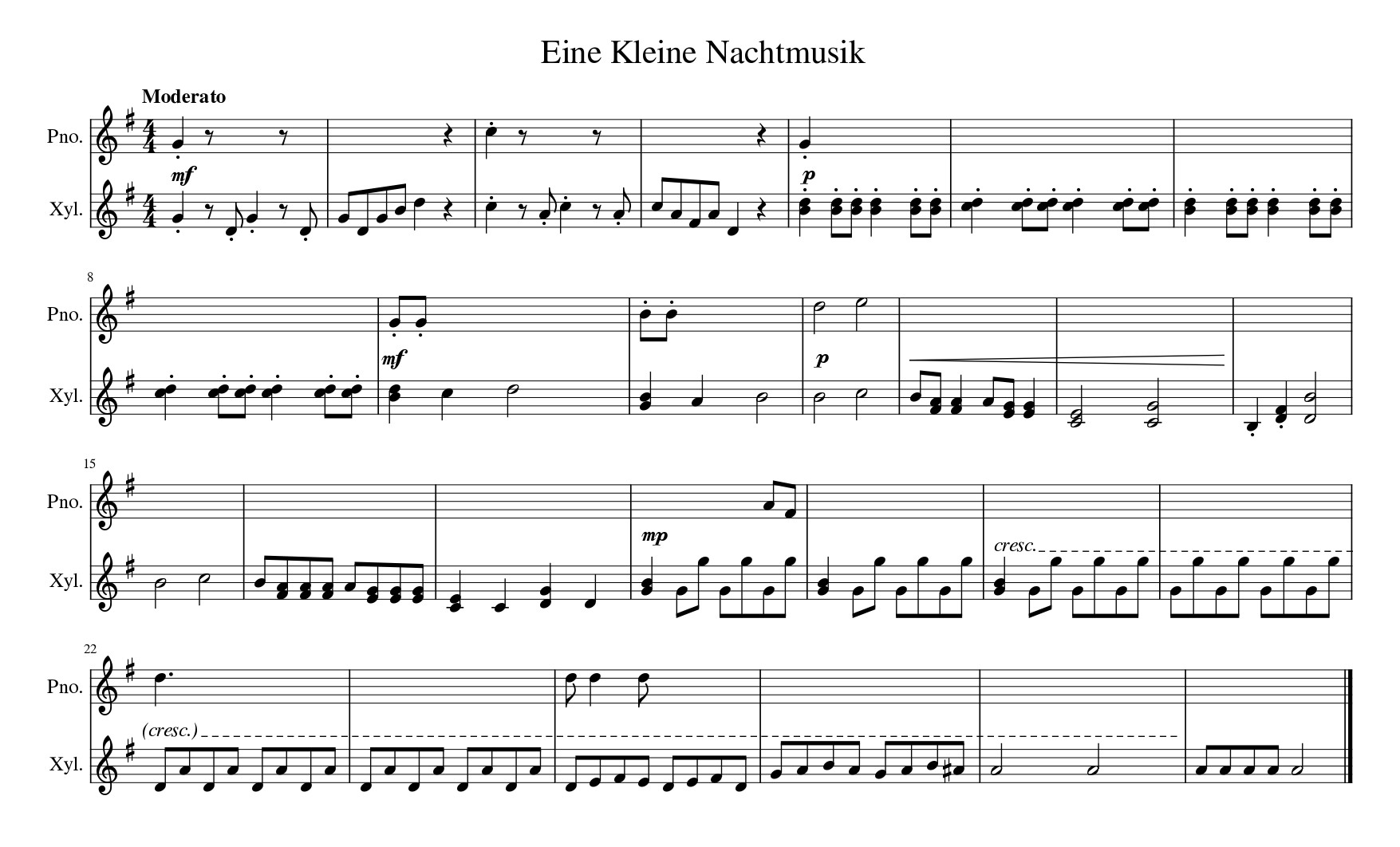
Finally, here you have got the sound file corresponding to the accompaniment.
And now, let's see how much you know about the score.
1. The rhythm of this piece is...