Melodic reading practice 1.
 1- Look through the staves in the exercises and sing the notes aloud according to their pitch. While you sing, mark the corresponding time signature with your hand.
2- Remember 6/8 is a compound duple time signature. Compound because each beat is subdivided into three notes and duple because there are two groups of three beats.
3- Listen to the sound file to check if you have done it properly or simply to help you follow the melody.
4- You should increase speed gradually till you get to the given tempo marking and check for semitones too.
| Exercise 1: 4/4 time signature. |
|
Use the sound file to see how well you are doing.
|
| Exercise 2: 3/4 time signature. |
|
Again there's a sound to check your improvements.
|
| Exercise 3: 6/8 time signature. |
|
Listen to the following file to check your progress.
|
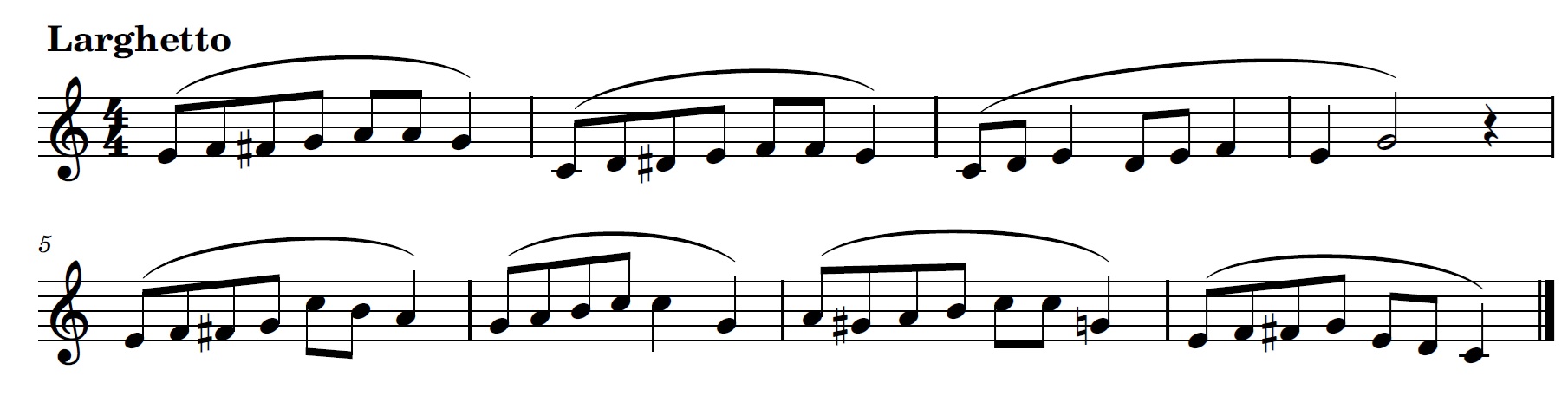


 Here's another exercise. In this case it is a canon, a musical form in which one second voice repeats exactly what a first voice presents but shifted in time, creating a texture known as strict imitative polyphony.