This is a melody to sing. Study it, memorize it and sing the notes. While doing that, keep the beat with hand movements according to the time signature. There are also some questions about the music notation which are related to the theory studied so far.
Part 1: The Sorcerer's Apprentice: score + sound + video

The Sorcerer's Apprentice was originally a symphonic poem composed by Paul Dukas in 1897. It was inspired by Goethe's 1797 poem Der Zauberlehrling. The melody tells the story of a young apprentice who tries to make a broom bring buckets of water. Unfortunately, he can't control it, which leads to chaos till the moment that the master shows up.
This composition is an example of programmatic music where the orchestration reflects the events of the poem. Characters and elements, such as the apprentice, the broom, and the water, are represented by a key musical theme. Several instruments are used, for example, flutes, clarinets, bassoons, and glockenspiel, creating that way lively and dramatic sounds.
The piece became very famous as it was part of Disney's animation film Fantasia (1940), where Mickey Mouse played the part of the apprentice.
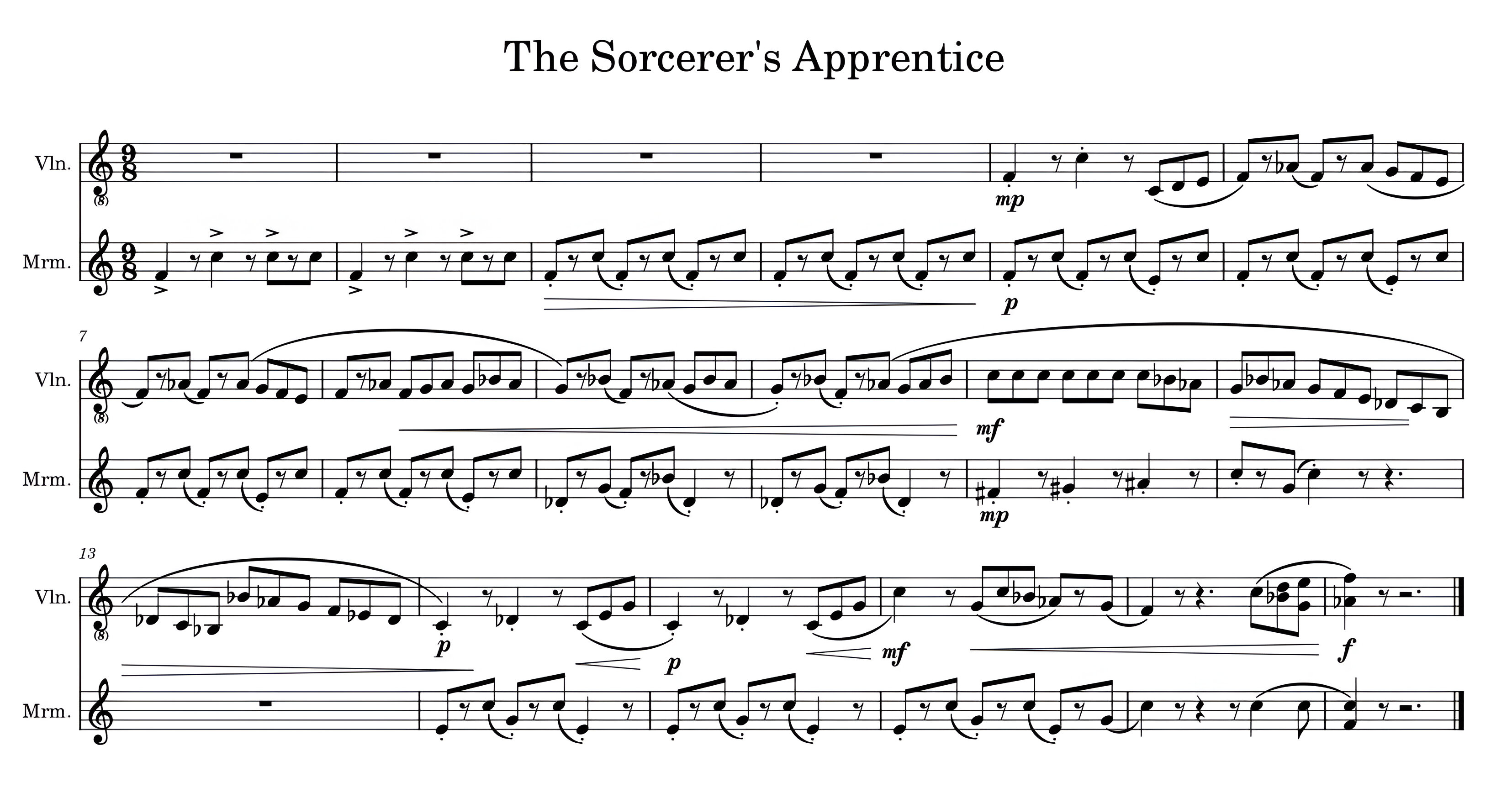
Now pay attention to the sound file. Were you singing properly?
Finally, whether you would like to check sound and see the notes or receive extra help, here's the video score. This is the real tempo of the piece. Try to gradually increase the speed to see if you can play it just as fast.
Lorena Varela. The Sorcerer's Apprentice Arrangement
(CC BY-SA)
Part 2: The Sorcerer's Apprentice: silent bars
 Now the same but with some silent bars. Sing the notes even in the silent bars, trying to keep the beat and paying attention to notes and other score markings.
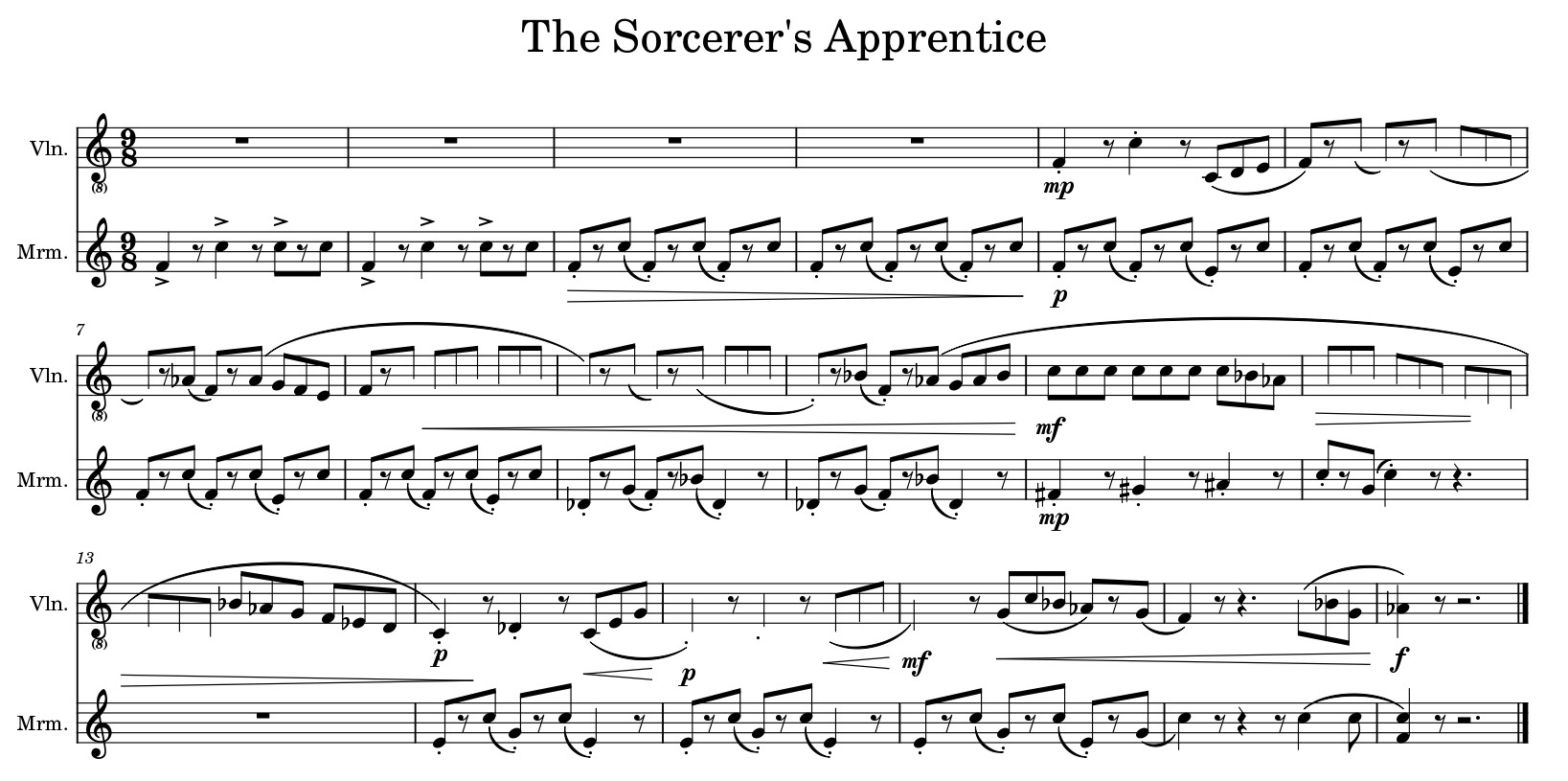
Here you have got the sound file with the silent bars. You may use it to help you know if you are singing it correctly.
Part 3: The Sorcerer's Apprentice: accompaniment
 The next step is singing the whole song by only listening to the accompaniment. This is a new stage. By now you should be able to sing all the bars if you have rehearsed enough part 1 (listening to the complete melody) and part 2 (listening to the melody but with some silent bars).
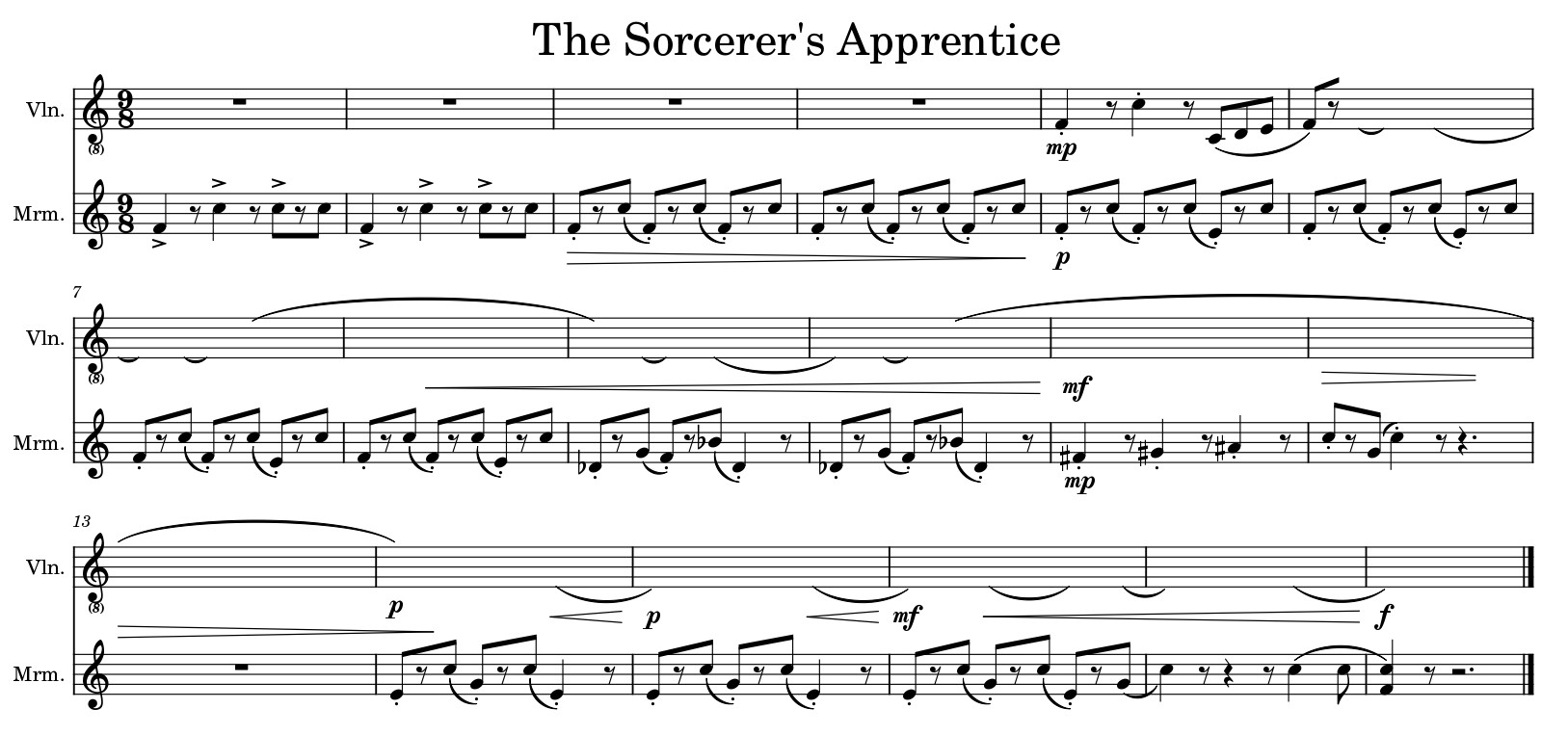
Finally, here you have got the sound file corresponding to the accompaniment.
And now, let's see how much you know about the score.
1. There are ties and slurs in this piece.