Melodic reading practice 1.
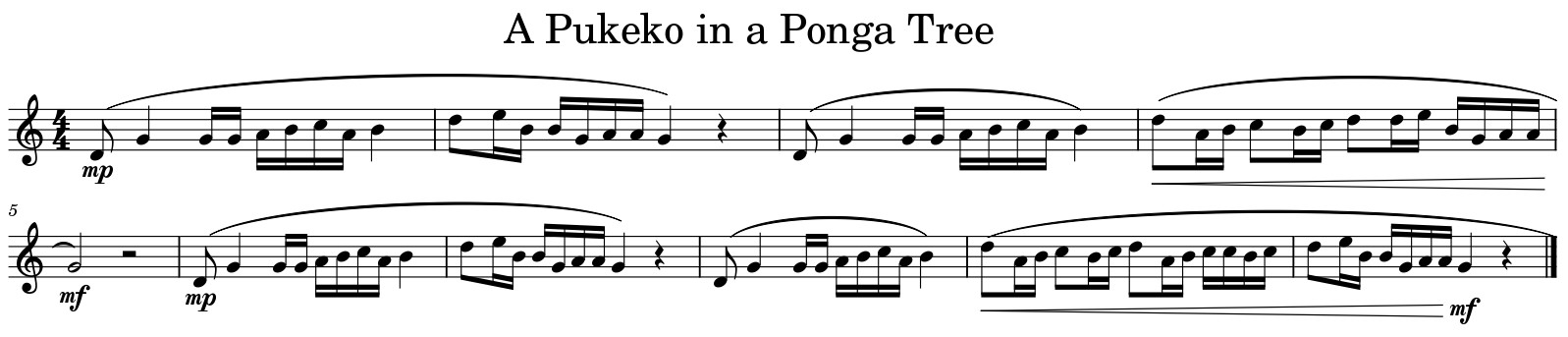
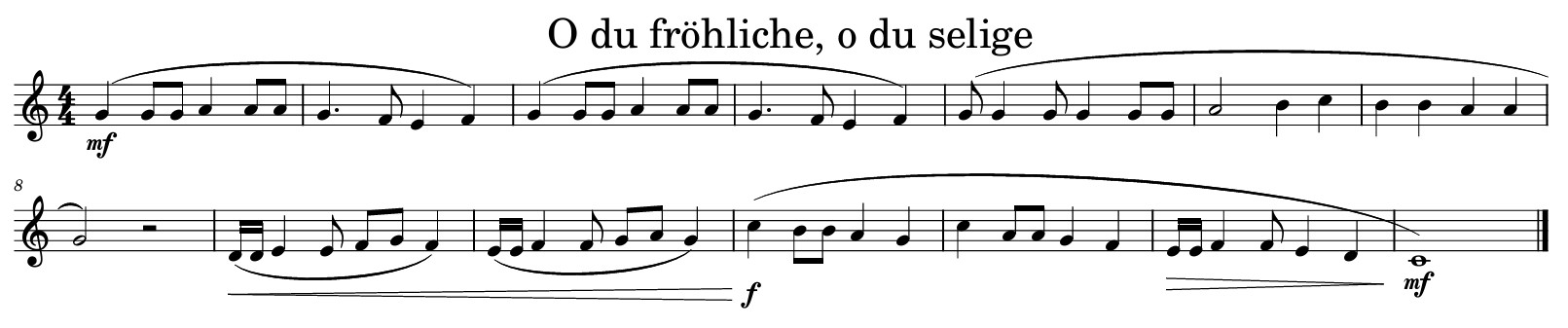
1- Look through the staves in the exercises and sing the notes aloud according to their pitch.
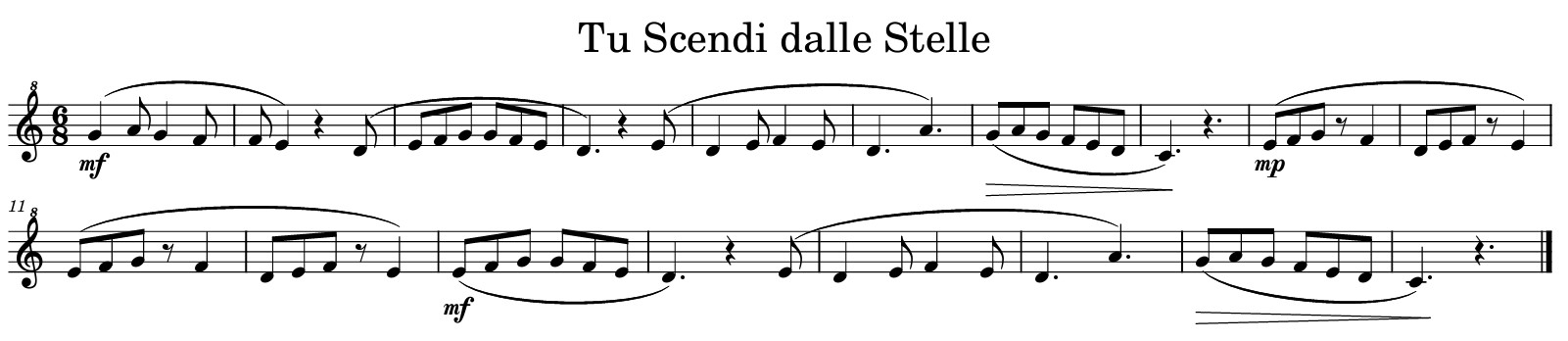
2- One of the exercises has got the 6/8 time signature. Remember it is a compound duple time signature. Compound because each beat is subdivided into three notes and duple because there are two groups of three beats. Here's the note pattern to be found in the 6/8 time signature:

3- Listen to the sound file to check if you have done it properly.
4- You should increase speed gradually every time you sing the notes and at the same time keep the right pitch.
The scores you can find here are Christmas carols. The first one, A Pukeko in a Ponga Tree, is a 1981 New Zealand version of the British carol The Twelve Days of Christmas. The second, Deck the Hall, is a 16th-century Welsh melody, whose lyrics were written by the Scottish musician Thomas Oliphant in 1862. The German poet Johannes Daniel Falk wrote lyrics for a Catholic hymn called O Sanctissima, which has become the famous carol O du fröhliche o du selige. Finally, Alphonsus Liguori, an Italian priest, wrote this now well-known Italian carol, Tu Scendi dalle Stelle, in 1744.
| Exercise 1: 4/4 time signature. |
|
Use the sound to see how well you are doing.
|
| Exercise 2: 4/4 time signature. |
|
Again there's a sound file and the video score to check your improvements. |
| Exercise 3: 4/4 time signature. |
|
Listen to the following file to check your progress and watch the video with the score to better understand how melody evolves. |
| Exercise 4: 6/8 time signature |
|
Would you like to know if you are doing properly? Check with the sound file and the video score. |