Reading, memorizing and singing 2
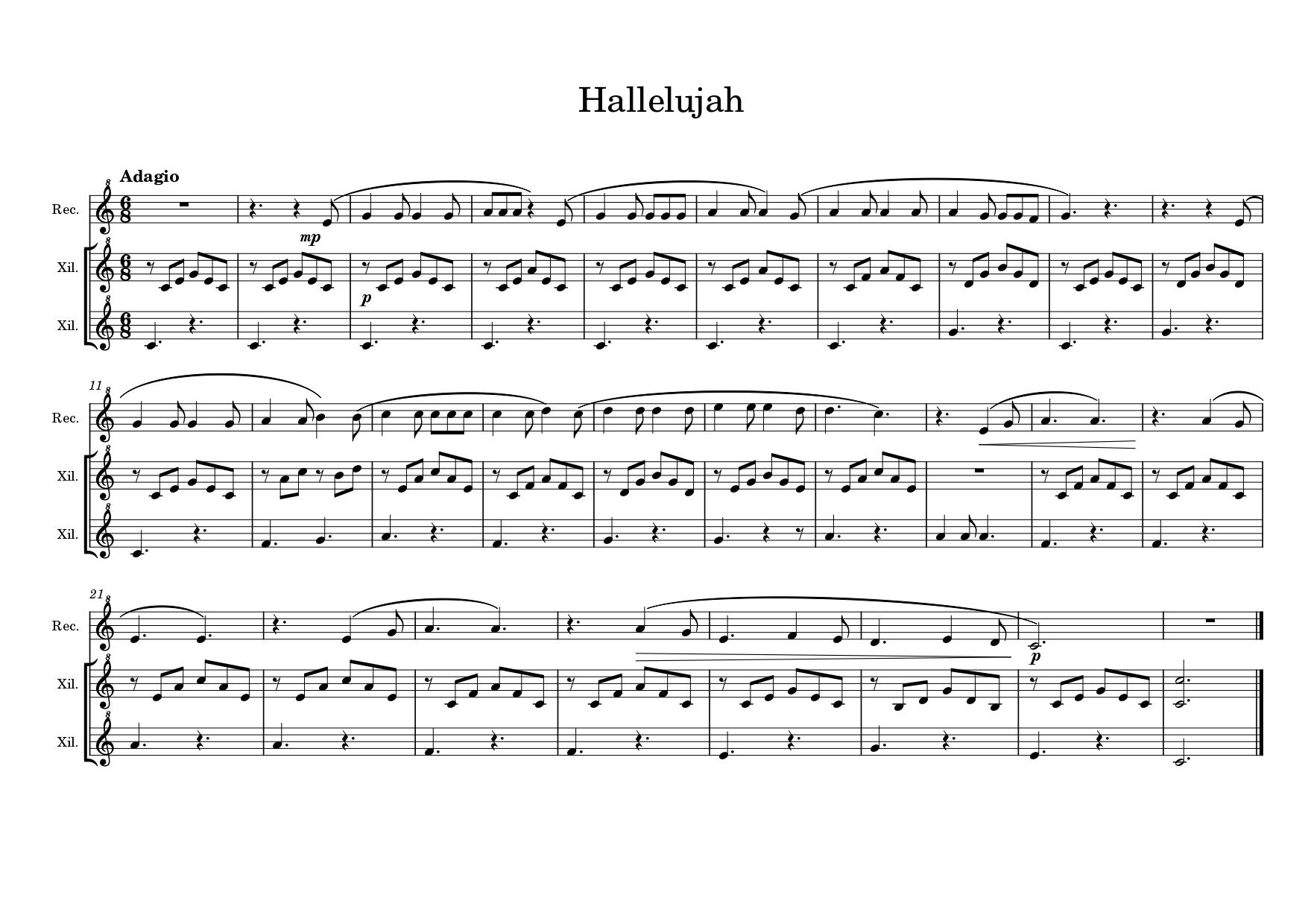
1. What type of alterations are in the piece? None. Pay attention. There are not any double flat, flat, natural, sharp or double sharp symbols.
2. The time signature of the piece is... b) Binary with ternary subdivision: The time signature is marked by two beats and there are three notes fitting into each beat. Look at the pattern:

3. The music form of this piece is: A-A'-B

4- Does this fragment contain any chromatic semitone or diatonic semitone? Yes, there is one diatonic semitone
5- Are there slurs or ties in the pieces? Ties. Look at the lines above the notes. they are ties.
This is the second melody to work with in this section. Remember what you have studied about six eight time signature, check the clef and see if you know all the notes and symbols that appear in the score. Let's start work!
Part 1: Hallelujah: score + sound + video
Look through the score, read it several times, study it and make sure you can identify all the notes. Pay attention to all the symbols in the score that indicate how the piece has to be played: slurs, ties, dotted notes, glissando, etc. Once you are ready, sing the notes aloud.
It is a song written by the Canadian singer Leonard Cohen. It was released in 1984 but was not initially successful. In the 1990s, two versions by other singers were released, and the song achieved great popularity. Over the years, the author changed the lyrics numerous times, and it has also been covered by many performers. It was also featured in the animated film Shrek. Nowadays, it is quite common to hear it at weddings and funerals.

Here's the sound file to listen to the score.
There is also a video if you need extra help to sing the notes and keep the beat.
Part 2: Hallelujah: silent bars
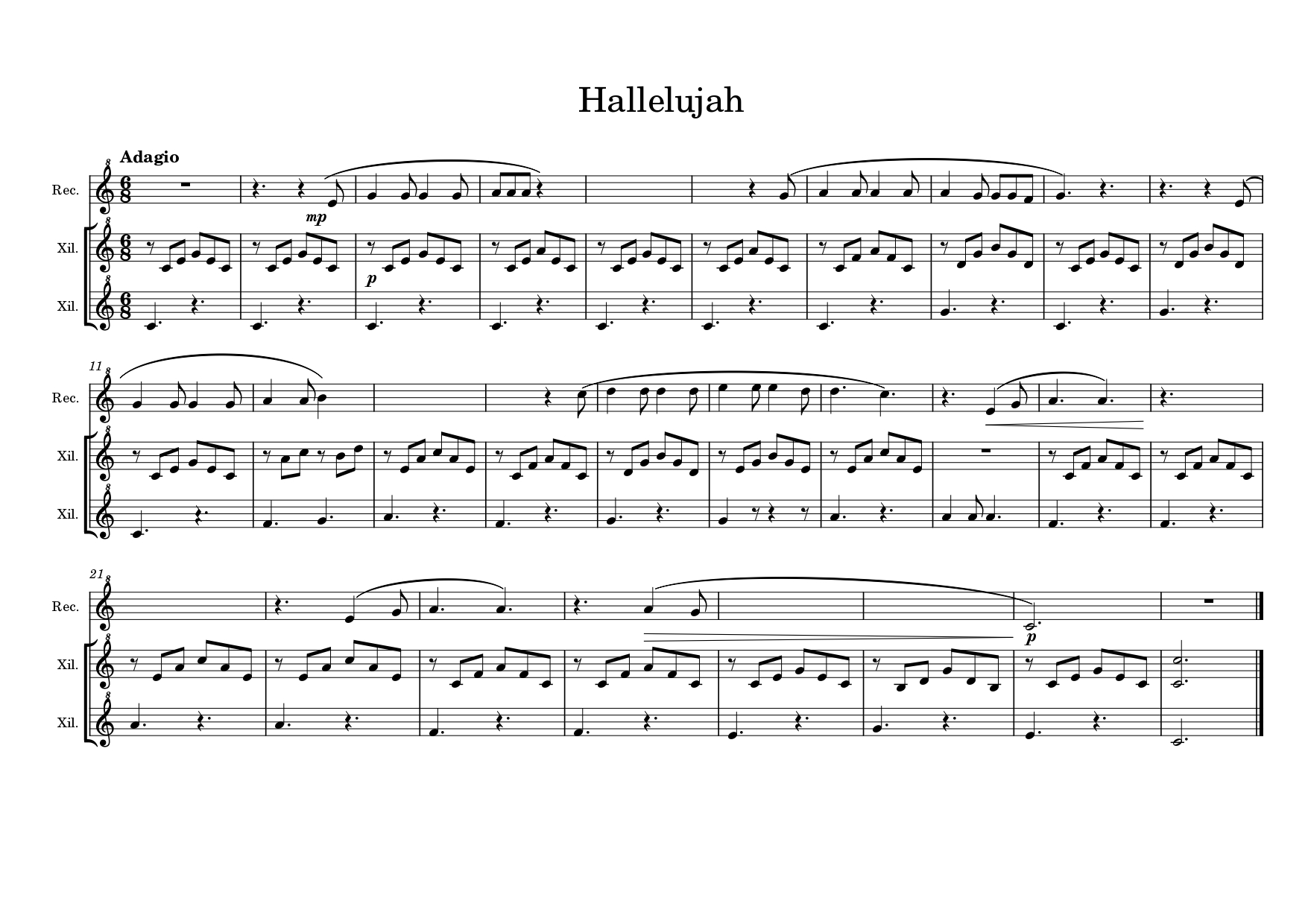
 Do the same as with the previous score but pay attention to the silent bars. As you have memorized the score, you won't have any problem in singing the melody during the silent bars.
Here you have got the sound file.Try to sing it while the music is playing
Part 3: Hallelujah: accompaniment
In this third part, there is only the accompaniment, so, you will have to sing the notes with that sound line alone. It is important that you have rehearsed enough for the previous exercises to do it fluently.

The sound file below is the one that contains the accompaniment alone. Let's see how well you can sing.
When you finish these three singing exercises, answer the questions below about the score. Once you have chosen the correct option, click on the word "Check". As soon as you have completed all the questions, you'll see the correct answers explained in a new window.