Country Codes are a Fact
Listen along
Linking with the previous section, you need to know international time before travelling, in order to arrange a trip, or
making international phone calls so as to avoid waking someone up in the middle of the night.
.
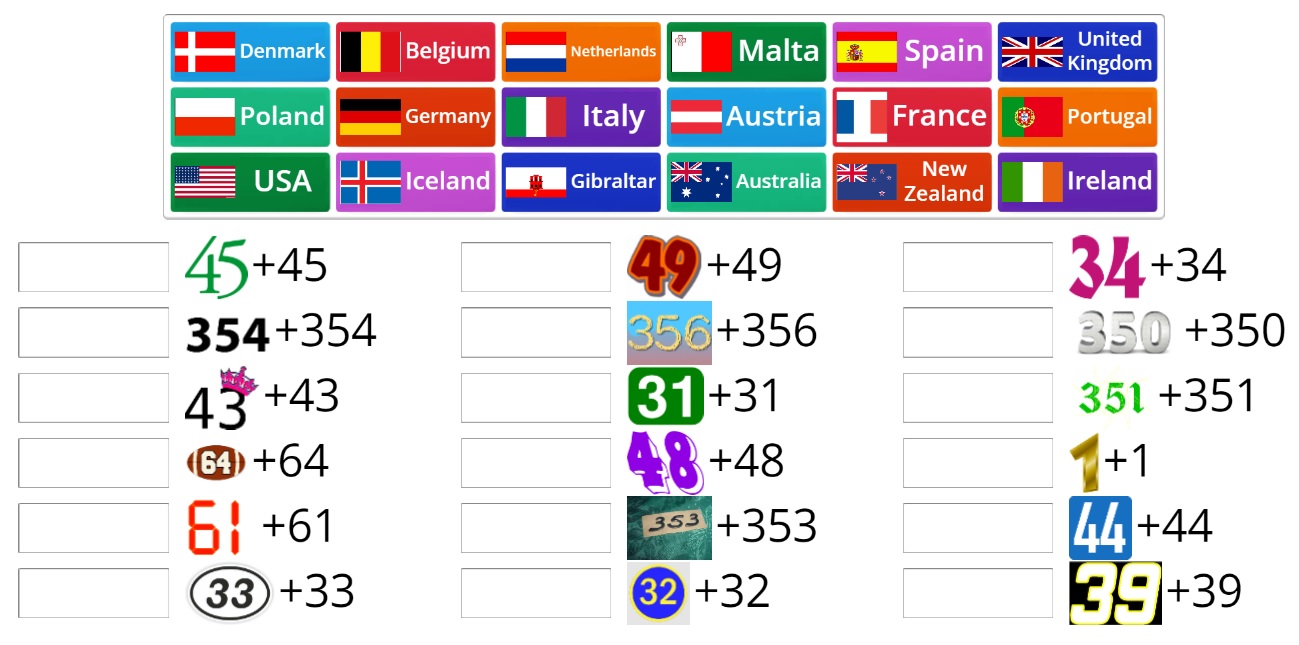
Every country in the world has an international code of their own, assigned and managed by International
Telecommunication Union (ITU), which must be dialed before the national number when making a phone call. The
country dial-in code differs for every nation and it is a small prefix containing one, two or even three digits.
The national number lenght also varies from three up to 17 digits depending on the country.
.
How is this in practice?
Let's say you are abroad (outside Spain) and you need to dial a Spanish phone number from a local number. In that
case, you should know that the international code for Spain is 34 and that national numbers in Spain have got nine
digits. However, the first thing that you must enter is the plus sign (+) or else 00 before the country code.
There are also many conventions for expressing the phone number, being the most important thing that you separate
these. For example, the complete phone number from abroad for Sergas (Servicio galego de Saúde) would be:
+34 - 981- 952950 or 00 34- 981- 952950
The three digits after doble zero would correspond to the national prefix (981 for A Coruña) and the remaining six
correspond to the national number. We won't delve into national prefixes though.
.
Today you can make free international codes through your smartphone and apps like Skype, Whatsapp, Face Time,
Line or many others. This is a really useful resource to practice oral English with native speakers. If, on the contrary,
you need to pay for calls, be aware of the fact that there exist international calling cards or SIM cards which allow you
to make much cheaper phone calls.
.jpg "Telephone box")