"Solfeggio"
The sixteenth note
In Strauss’ score this note appears, the sixteenth note. 
Do you remember it?
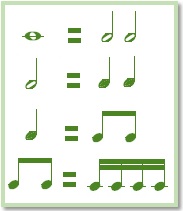
There are 16 sixteenth notes in a whole note, hence its name.
Pay attention to the relation of the notes in this chart:
The signs of abbreviations
In Zaratrusta’s score there is a sign we haven’t seen before: 
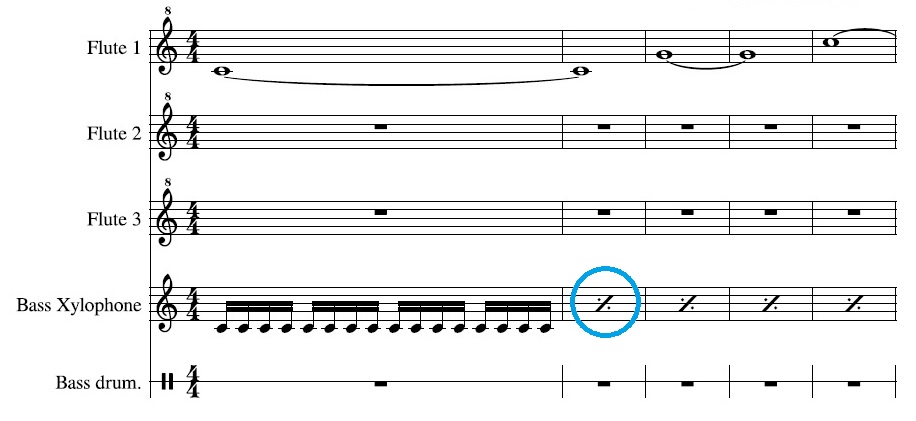
It is a sign that is used to indicate that a bar is repeated exactly as many times as in the previous one, the same fragment is repeated. They are the simile marks.
It would be like this:
There are others:
- Tremolo: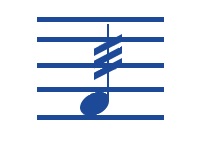
- Multi-measure rest: 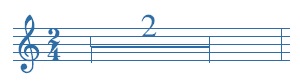
Form
We are going to work a little bit with the form of these scores.
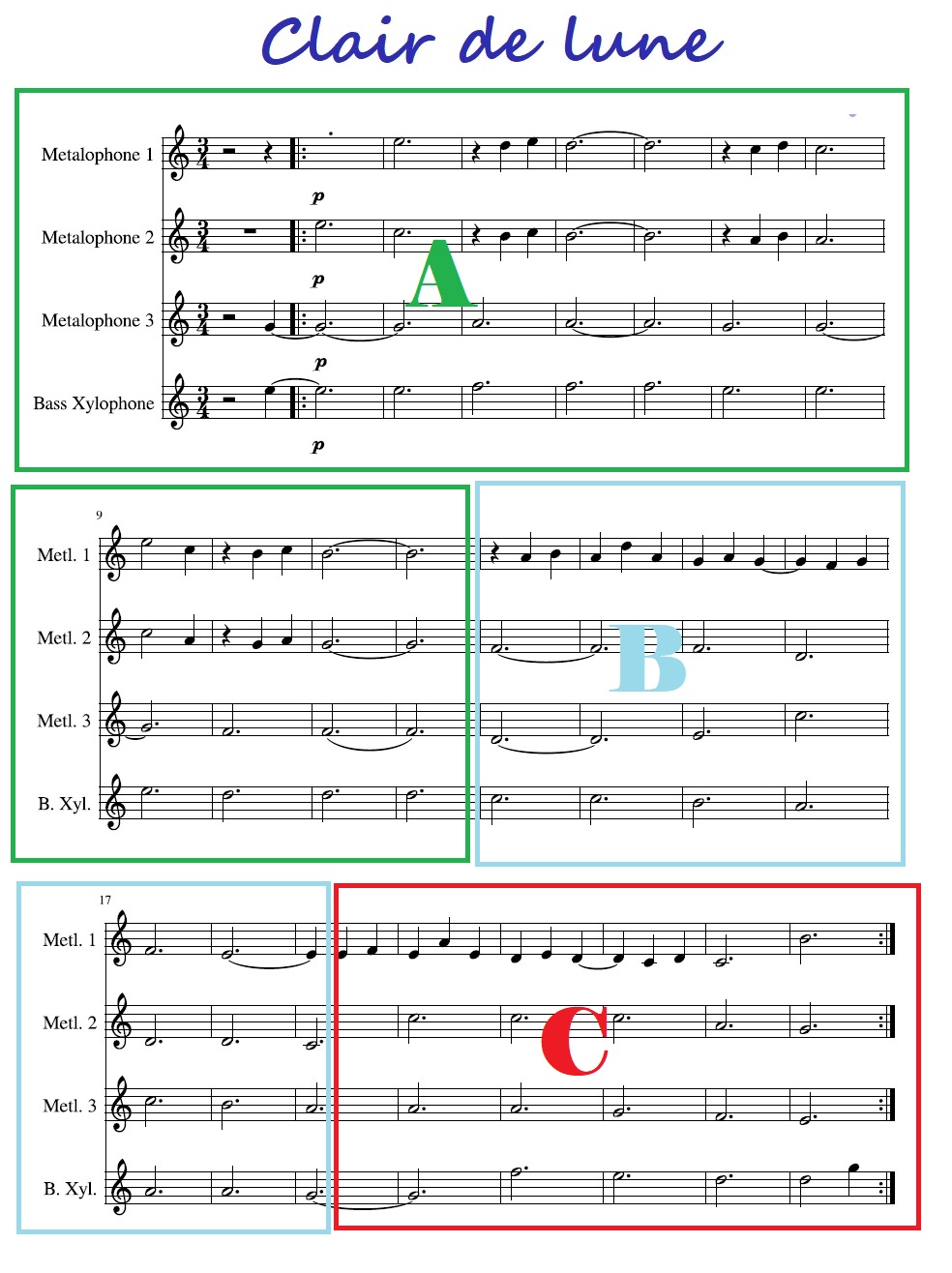
Are you able to distinguish the different parts in Debussy´s score?
It has 3 phrases, so it is ternary. But if you really pay attention, you can see that it is already different from the music from the previous periods, isn't it?
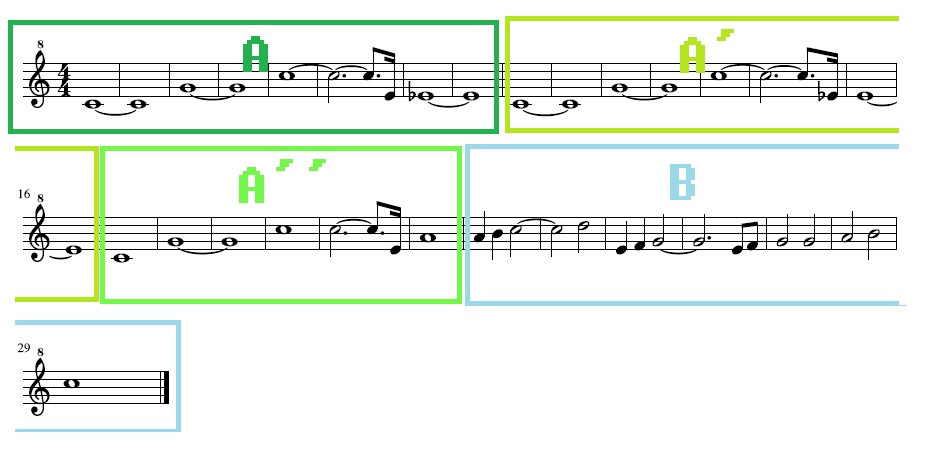
In Strauss´score, we have 4 phrases of which the three first are similar, changing only the end. The last sentence is the most different of all. Can you see it in the flute?
What did we learn?
True-False Question:
Feedback
False
It is made up of 4.
Feedback
True
Two quarter notes with a tie make a half note.
Feedback
False
It is a tremolo.
Feedback
False
The bars should be equal.
Feedback
True
Number 2 indicates the amount of bars in silence.
Feedback
True
It is made up of 3 quarter notes.
Feedback
False
It would be a 4/4 because it has 4 quarter notes.
Feedback
True
Licensed under the Creative Commons Attribution Non-commercial Share Alike License 4.0