"Solfeggio"
Tonality
Do you remember what tonality is? It was the same in music as in colours: there are different tonalities of the same colour.
This drawing, is it the same?
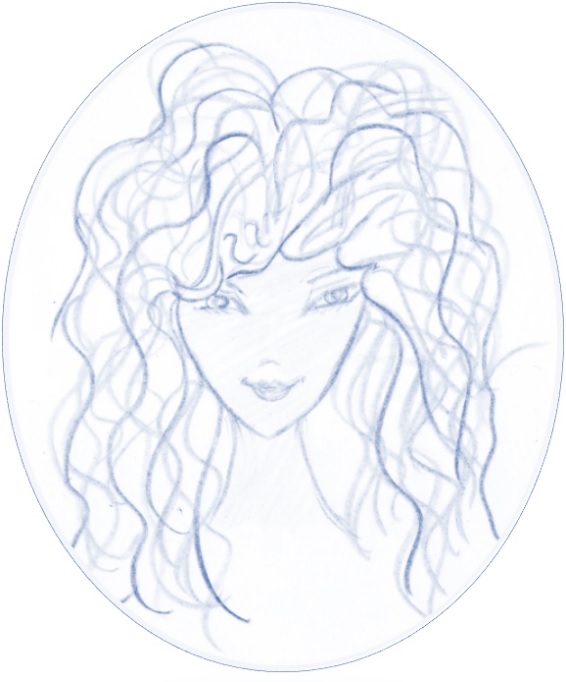
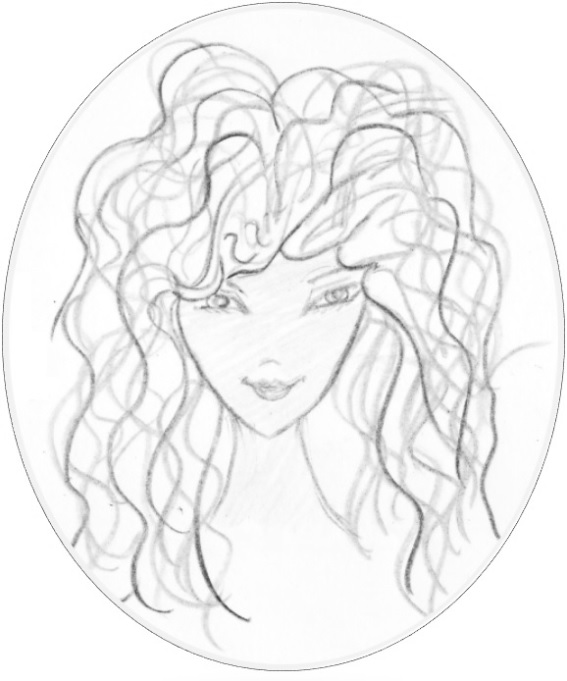

Yes, it is, but with different tonalities.
The same melody can be sung in different heights, but it is still the same. Check it in the following recording!
This is what is called tonality!
Besides tonality, there is another tool to give music colour. This is what allows us to make happy or sad songs: it is called modality. This one we are singing, what do you think about it? It sounds a bit sad, that’s why it’s minor, whereas if it were happy it would be major.
Check the difference listening to the audio!
The scale we use in this song is F major. Practise it with the audio.

Notice that the accidental of B flat appears in the key signature, so every time a B appears we have to make it flat. Don’t forget it!
What kind of scale are you listening to?
Solution
Solution
Solution
Solution
Texture
We are going to talk about musical texture. What is that?
In order to be able to understand it we are going to carry out an experiment.
Close your eyes and touch the different clothes the teacher is placing on our hands. Can you recognize them? A pair of jeans, a tracksuit or a woollen pullover. We can distinguish them thanks to the touch, can’t we?
In music this difference is called texture: it is the final result of a composition that depends on the number of voices or instruments it has and on how they relate to each other.
We already know about monody thanks to music in the Middle Age, do you remember it? It was the Gregorian chant that many monks sang at the same time.
After that, polyphony emerged and it involved many voices.
There are several types of polyphony. Today we are going to learn about the accompanied melody that appears in the Emperor Waltz.
If you pay attention you can see there’s a melody (in flute) and an accompaniment (metalophone and bass sylophone).
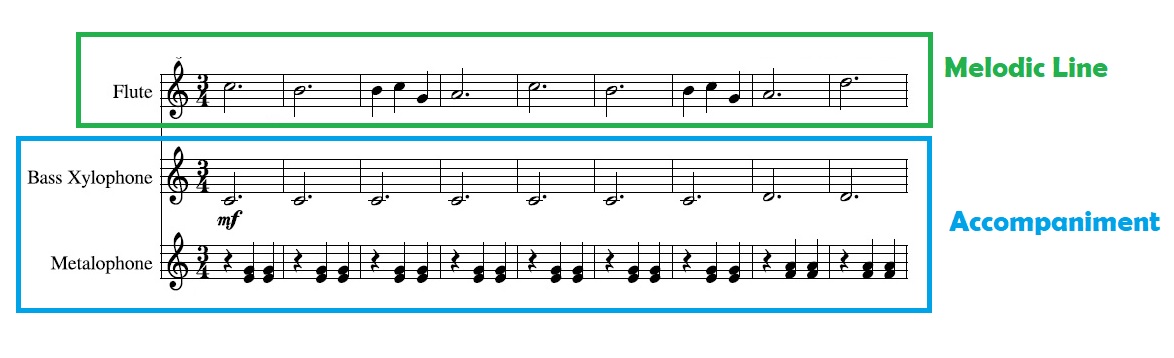
This texture is one of the most used nowadays, like in pop music: one person sings and the others accompany them with instruments like drums, guitar or electric bass.
A variant of this accompanied melody emerged during the Classicism, it was called the Alberti bass (for a composer who made it popular): instead of playing the notes in the chord at the same time, they are alternated, making different drawings.
Take a look at the examples and you will understand it better.


Improvising!!!
We are going to develop our imagination by making up melodies!
From the Alberti bass, which is playing in the audio, we have to try to sing the melody. You can use the syllables na or ta, and if you’re feeling brave, you can try your own lyrics.
Are you ready?
Dynamics.
In the Romanticism there were always indications of dynamics, because instruments like the piano allowed doing it.
In the Emperor waltz there were some indications about dynamics. Do you recognise them?
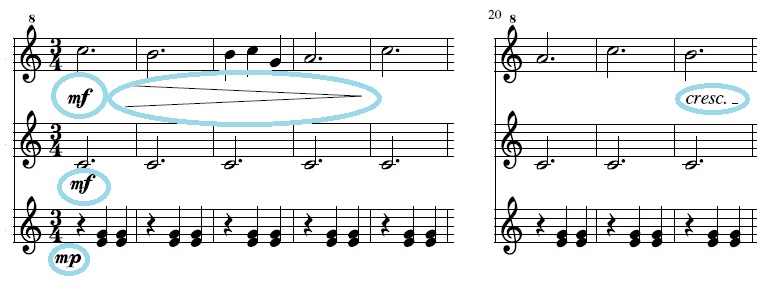
New symbols appeared: . Their name is hairpin.
They are intensity dynamics that indicate where we have to go to, from forte to piano or vice versa.
There also appeared some abbreviations: cresc, also referring to intensity. . It means crescendo, so we will have to increase the intensity progressively on those parts.
Call and response form
We are going to discover the form in Papageno’s duet. Does something different happen from what we are used to?
There’s a game between the two characters, Papageno and Papagena (in the score they are flute 1 and flute 2) as if it were a conversation. One presents an idea and the other responds in a similar way.
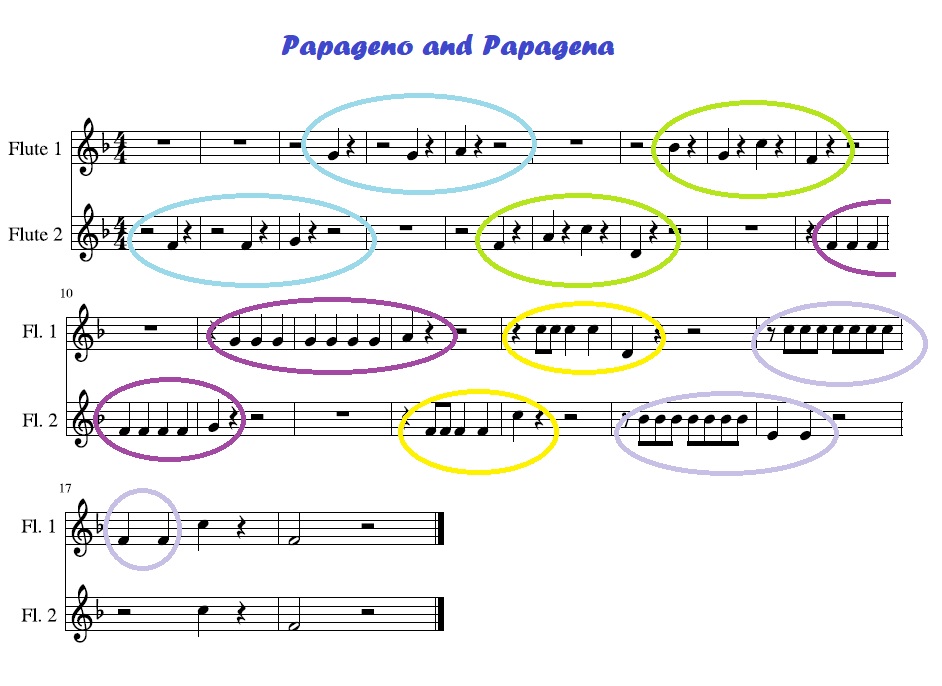
This is known in music as call and response or antiphony
Here you have an example to understand it better.
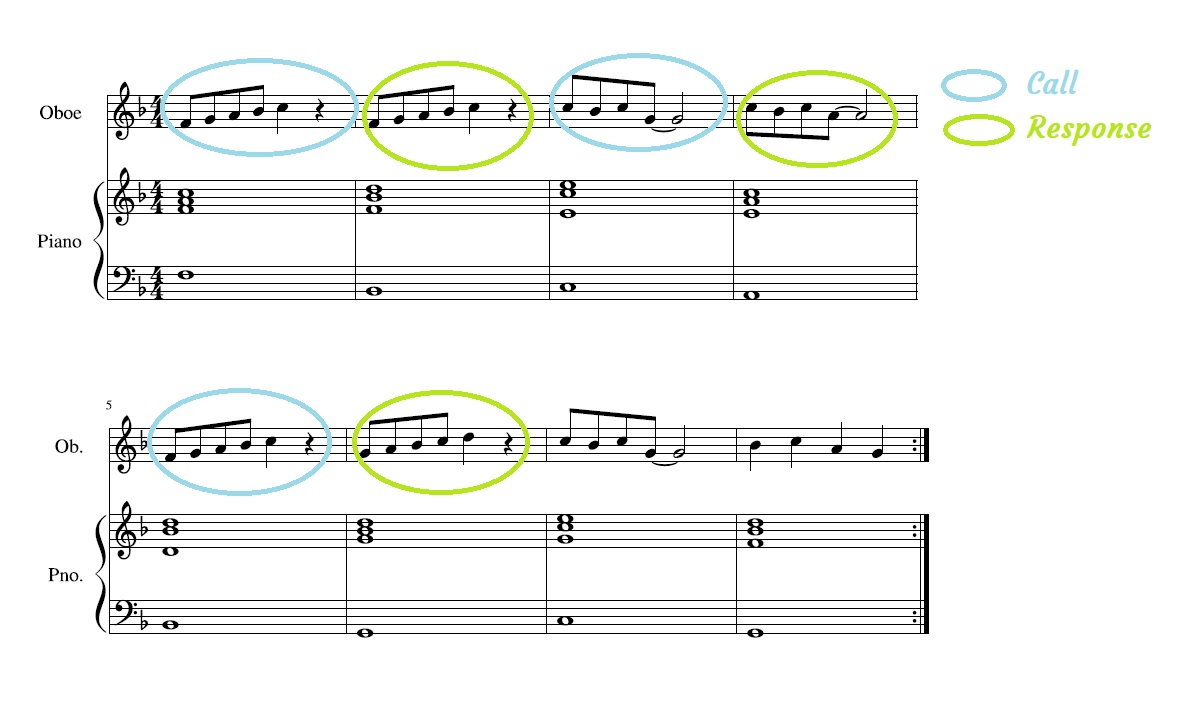
Licensed under the Creative Commons Attribution Non-commercial Share Alike License 4.0