DANCING
Dance in Galicia
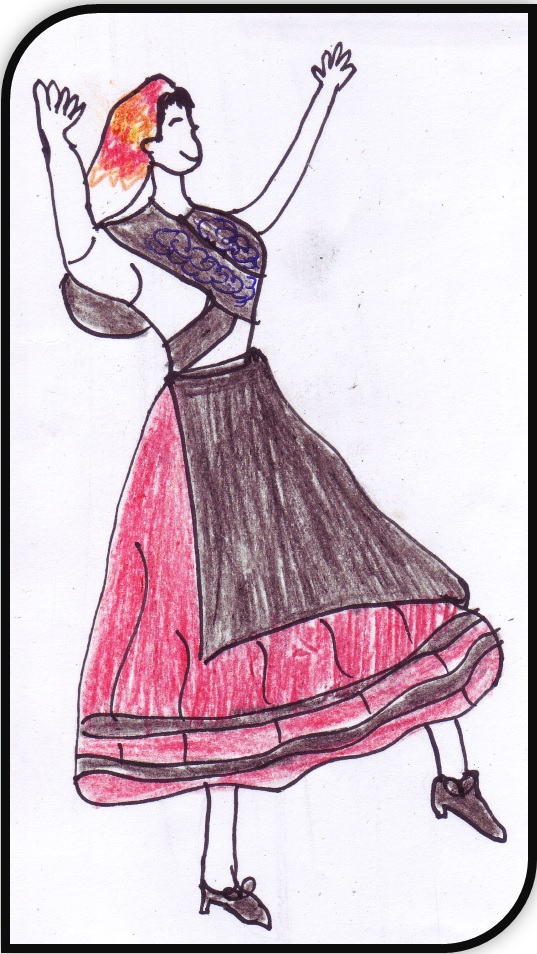 Dancing is part of the traditions in every country, and it’s always related to music.
In previous years we already learnt some typical dances from Galicia. Let’s remember them:
- Muiñeira: it’s one of the most characteristic dances. The word derives from muiño (mill), and comes from the tradition of singing and dancing when the lads were grinding the grain. It has two sections that are repeated to lead to the dance. There are two variants, the muiñeira vella (the oldest one and with a characteristic tambourine rhythm, and the number of dancers is fixed) and the muiñeira nova (the most popular one, with a fast rhythm of 6/8, the number of couples is unlimited and it’s more improvised). Normally in the dance a couple did the “punto” (step) and then the others repeated it.
- The pandeirada: it takes the name of the beat of the hand drum. Women usually sing it: one of them sings the first two measures and the rest join next. It’s very similar to the muiñeira in the dance.
- The xota: it’s a very agile rhythm in 6/8 and the way of dancing it is very similar to the Aragonese style, but without raising the feet so much.
- The danzas das espadas: it has a medieval origin. The dancers wear white clothes and a blue sash crossed over the chest. The espadas are held with ribbons to the wrists. The dance is in pairs with the hands up. Women’s movement is slower while men jump around them. They always end up in a circle.
Shall we dance a muiñeira?
Of all the dances we’ve talked about, muiñeira is the most well known.
Let’s practise some of its basic steps that are called Puntos:
- Back and forward (Delante-detrás): on tiptoes, move one of your foot back and forward. This step is combined with some of the following ones.
- Heel and toe (Punta-tacón): as its name points out, with the same feet, we do the heel and toe.
- Turn: we turn around ourselves in three steps.
- Raise foot: we open the foot, raise it up the knee and then lower it.
Combining these steps we can do our muiñeira.
Licensed under the Creative Commons Attribution Non-commercial Share Alike License 4.0