Melodic reading practice 1. G-clef
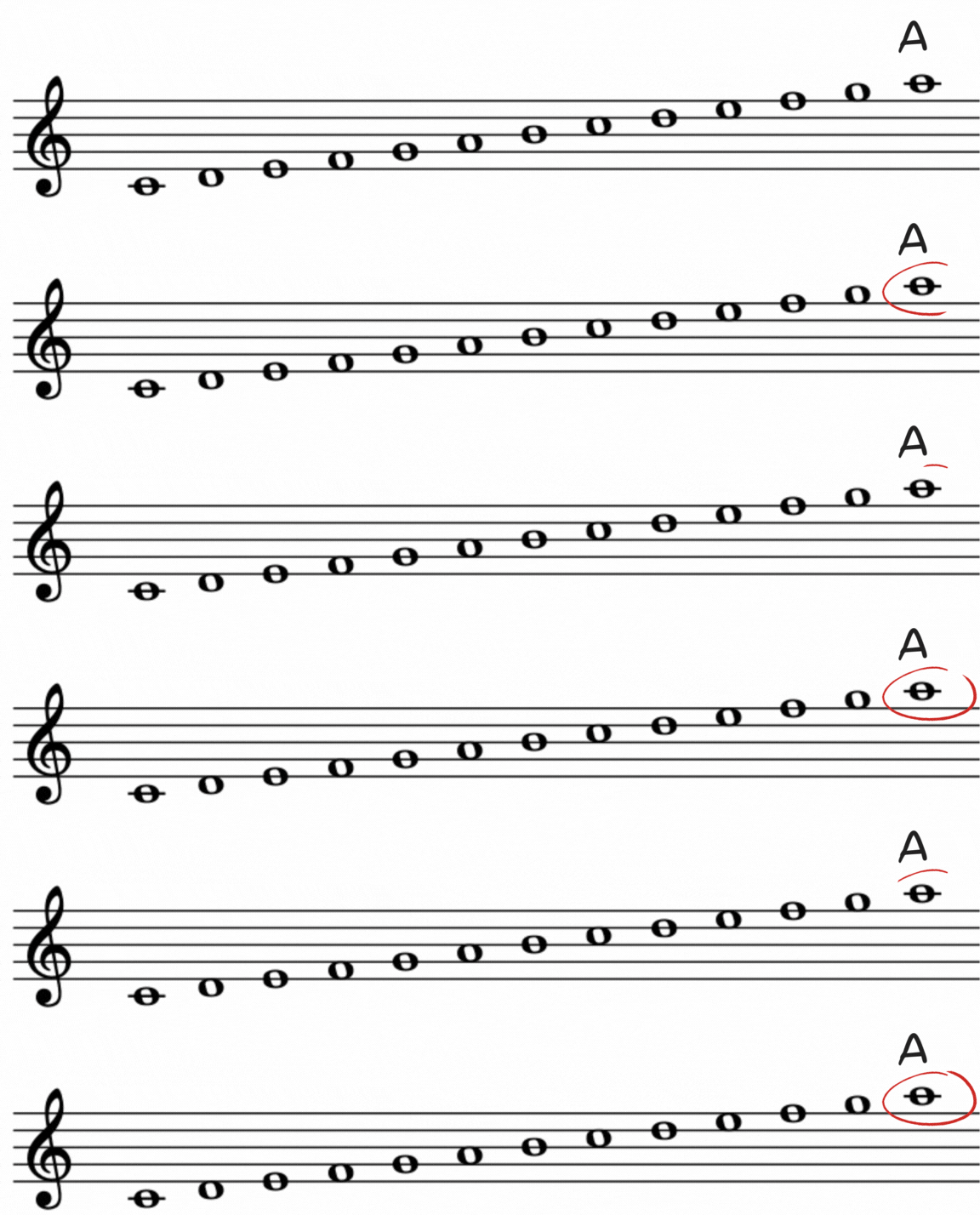
1- Look through the staves in the exercises and sing the notes aloud according to their pitch. There are notes you have already seen but pay especial attention to A on the first ledger line above the stave. While you sing, mark the corresponding time signature with your hand.
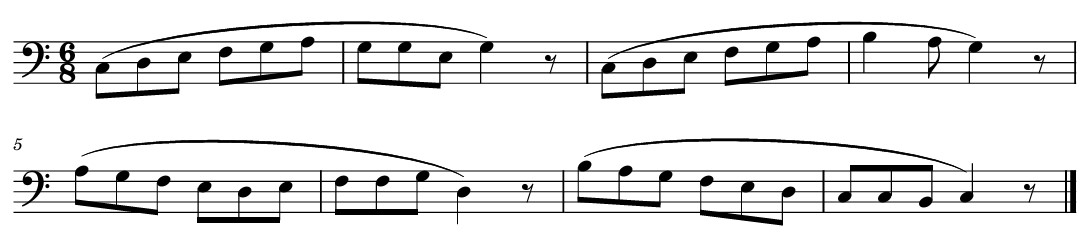
2- The exercises here have got a new time signature, 6/8. Remember it is a compound duple time signature. Compound because each beat is subdivided into three notes and duple because there are two groups of three beats. Here's the note patttern to be found in 6/8 time signature: 
3- Listen to the sound file and watch the video with the score to check if you have done it properly or use the videos to simply help you follow the melody.
4- You should increase speed gradually every time you sing the notes and at the same time keep the right pitch.
| Exercise 1: 6/8 time signature. |
|
Use the video to see how well you are doing. You have also a metronome sound with the melody in the sound file in this first exercise to help you better understand the time signature.
|
| Exercise 2: 6/8 time signature. |
|
Again there's a video with the stave to check your improvements.
|
| Exercise 3: 4/4 time signature. |
|
Now, let's see how simple, duple time signature works. Here there is a note pattern to be found: Now, let's see how simple, duple time signature works. Here there is a note pattern to be found: Listen or watch the following files to check your progress.
|
| Exercise 4: 2/4 time signature |
|
Would you like to know if you are doing properly? Check with the sound and video score files. |


 Here there are two more exercises but using an F-clef (also called bass clef) .