HISTORY
Middle Age
The Middle Age goes from 600 to 1400 a.d. It was very long, wasn’t it?
In this period only monks in churches could read and write, and the same happened with music.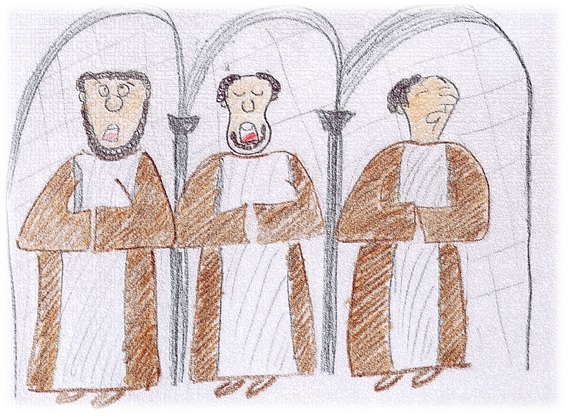
One pope, Gregory I, gave name to the most important songs: Gregorian chant. It was performed by monks in churches, it was always sung a cappella, that is, without instruments, in Latin and with free rhythm. The main characters in these songs were taken from the Bible.
 But although the rest of the population could not write, they also had their own music, to sing and dance. They were performed by the troubadour or the minstrel, and they told stories in the population’s language.
Guido D´Arezzo
There was a monk among all who became in one of the most important people in the history of music.
Guido d´Arezzo was an Italian monk who was born in a village called Arezzo in the north of Italy. He was so important for music because thanks to him today we have staves and notes where to write them.
 He gave name to the notes based on the first syllable of a hymn to St. John the Baptist.
He invented the musical notation with the so-called Square notation. This was made up of a four-line stave (later changed to 5) and notes that were drawn like squares.
He designed the Guidonian hand, making a map with notes in order to teach music.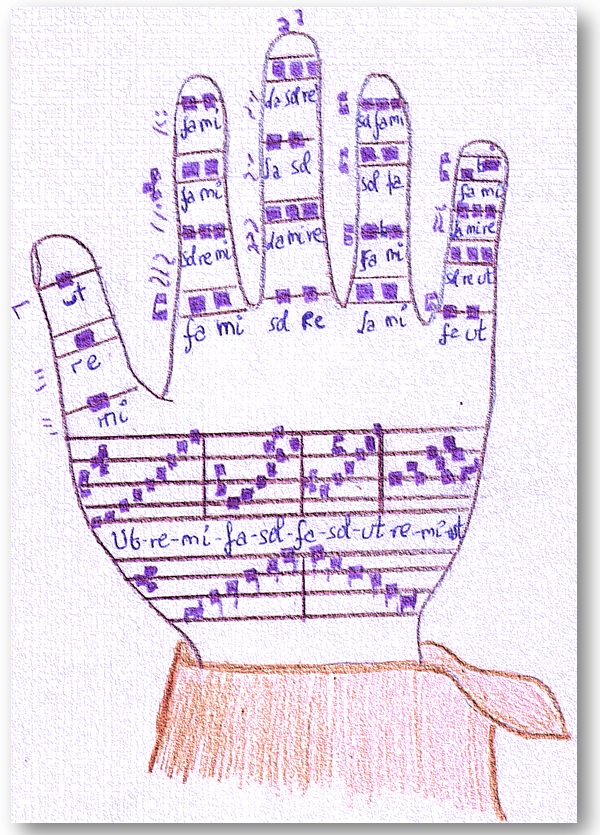
Renaissance
It took place between 1400 and 1600, approximately.
This period was full of great discoveries and inventions which led music to suffer big changes. One of the main inventions that influenced music the most was the printing press. At that moment not only monks could copy the scores. The machines did all the work and much faster. In this way not only religious songs were written.
It was at that time that people thought the Earth was flat and that the sun travelled around it, but you know this is not true, don’t you?
This was later proved when Columbus discovered America because he was sailing to India but ended up in another place. He called Indian to those natives he found there. What a mess!
Music evolved a lot, and one of the most important changes was the appearance of polyphony.
As the word itself indicates, Poly-phony, means many sounds.
Before that many people sang one melody, now they sing some different melodies at the same time, so many and so difficult that sometimes they will be very difficult to understand!
Music is sung in monasteries and churches but also in castles and palaces, that’s why instrumental music becomes more and more important. Songs are not only religious. People sing to love and different real and imaginary stories are told.
As noblemen and kings wanted to entertain themselves, music started to be played in the different balls organized in those luxurious places. Dancing became one of the most important forms of entertainment of the period.
Besides this, music, stories and dances were joined together and gave place to the first musical theatres.
The most important musical genres were:
There were a lot of composers who wrote lots and lots of polyphonic music. Some of them are
 Orlando di Lasso
Palestrina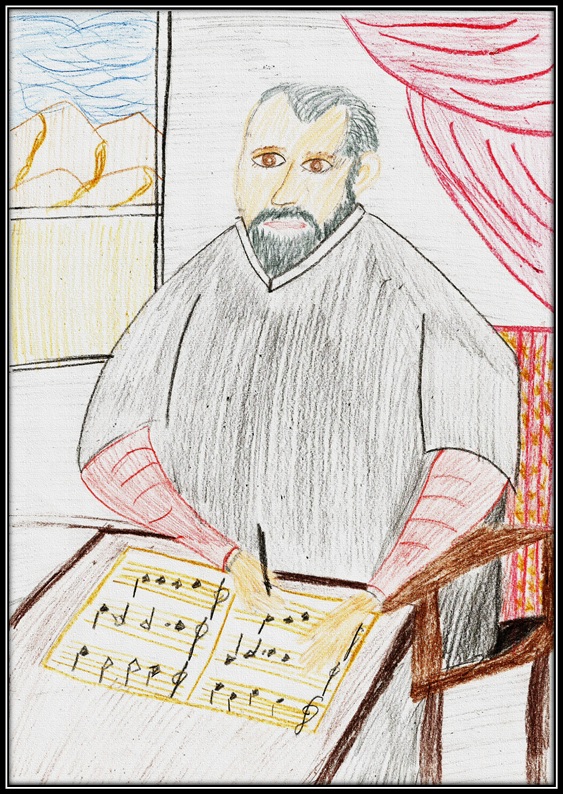
Who was Leonardo da Vinci?
Let's play as if we were detectives, looking for information about this character: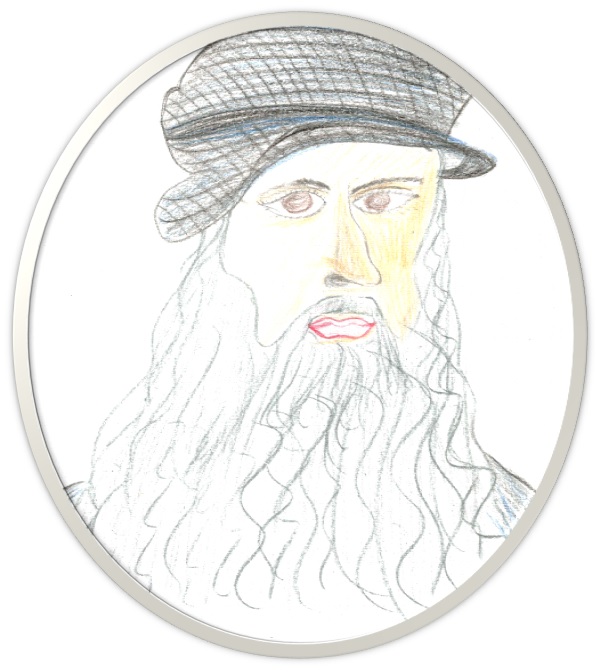
Who was he?
Where was he from?
Was he married? Did he have children?
Where did he work?
Why is he so important?
Other interesting things.
Are you listening? one or two voices?
Solution
Solution
Solution
Solution
Baroqe Period
We are now in year 1600. Kings loved ornaments and ostentation. Everything was extravagant and excessively ornate.
The same happened with music. Composers began to compose songs with lots of musical flourishes and sometimes it was very difficult to interpret them.
A new genre emerged which will be very important in history: opera.
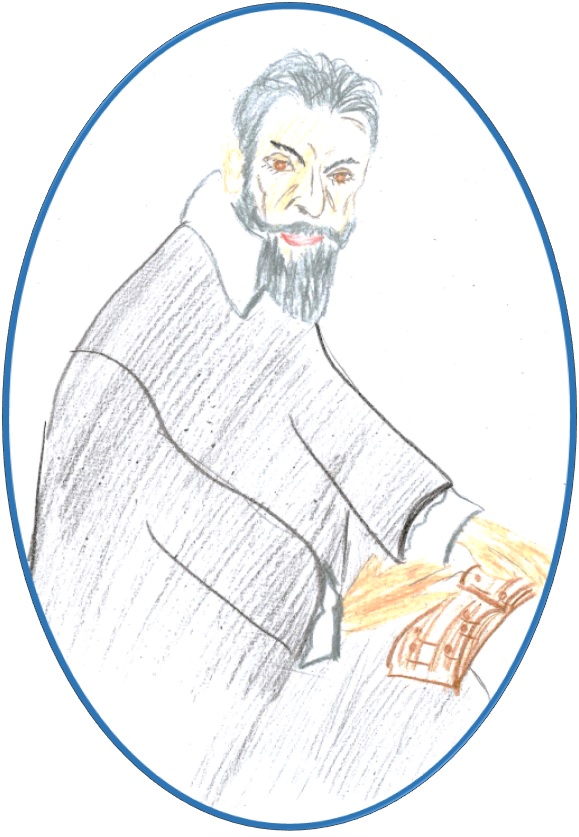 The first composer who wrote one was Claudio Monteverdi. The opera was called Orfeo and it was inspired in a Greek myth.
This new genre needed a new space to be performed so the first theatres appeared. The first one was built in Venice in 1637.
Opera used profane topics (history, myths, love, etc) and for religious topics there was another genre, oratorio, about biblical characters like the apostles.
Furthermore, a new line-up of instruments emerged, called orchestra. The first one of them was The 24 Violins of the King (they belonged to the Sun King in France and they were directed by Lully).
Thanks to this new orchestra some others genres emerged like the concerto.
The most important composers were
 Vivaldi (The four seasons)
Bach (with his fugues, preludes and concertos grossos)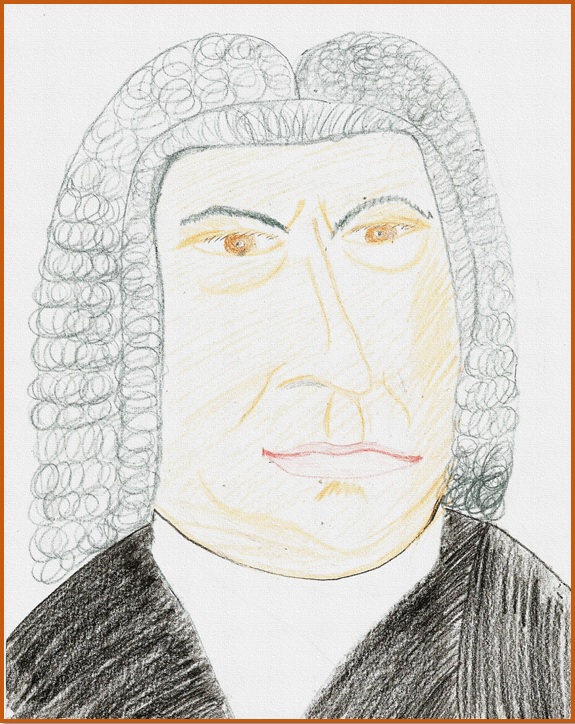
 Haendel (Water music or oratorio Messiah).
Do you know who Stradivarius is?
 Let's keep on playing as detectives to find out more about this character.
What do legends tell about him?
What is a Lutier?
What instruments can a lutier work with?
What did you learn about these 3 period in the history of music?
Read and complete:
Licensed under the Creative Commons Attribution Non-commercial Share Alike License 4.0